Jesus’ “Sermon on the Mount”. . . Matthew 5:13–16
“Salt and Light”
In this section of his Sermon on the Mount, Jesus transitions from describing the character of his followers (in the Beatitudes) to explaining their purpose and influence in the world. He uses two vivid and culturally familiar metaphors — salt and light — to teach about the believer’s role in society.
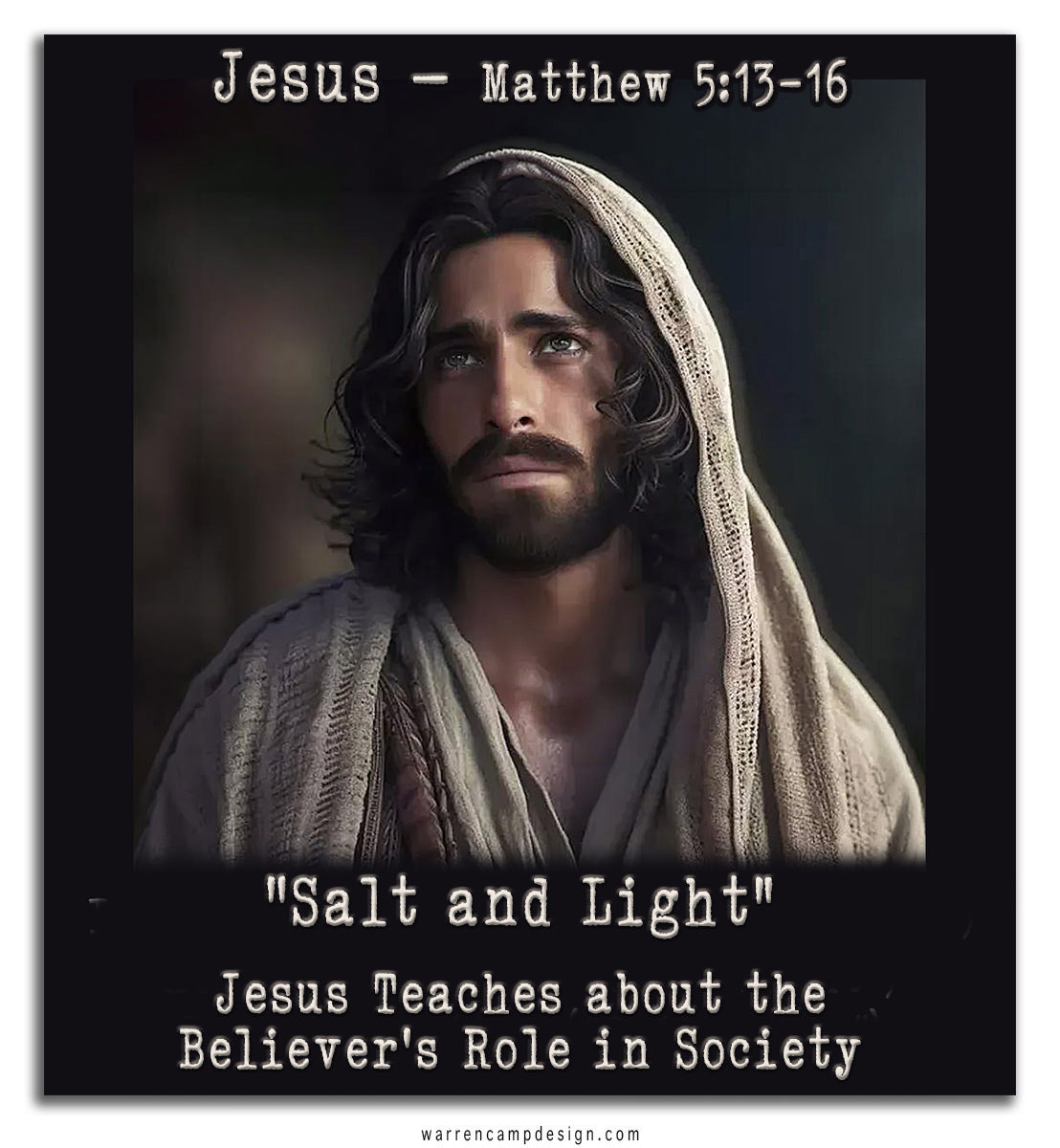
Click to enlarge and print this image of
Jesus teaching “Salt and Light.”
In Matthew 5:13–16, Jesus teaches his disciples about their identity and purpose in the world using two powerful metaphors: salt and light. He calls his followers “the salt of the earth” and “the light of the world,” emphasizing their role in preserving goodness, influencing culture, and visibly reflecting God’s character through their actions. The passage urges believers to maintain their distinctiveness and let their good deeds shine so others may glorify God.
In these verses, Jesus uses the metaphors of salt and light to describe the role of his followers in the world. Believers are called to influence the world for good — preserving truth, enhancing life with God’s presence (like salt), and shining his light by doing good works, leading others to glorify God.
Believers are meant to influence, stand out, and lead others to God through their lives. Jesus emphasizes visible, authentic, and impactful faith that glorifies God through actions.
Salt of the Earth — 5:13
“You are the salt of the earth. But if the salt loses its saltiness, how can it be made salty again? It is no longer good for anything, except to be thrown out and trampled underfoot” (v. 13, NIV).
You are the salt of the earth (v. 13a)
• Salt represents influence, preservation, and flavor.
• Jesus calls believers to preserve moral truth and bring value to the world.
• Losing “saltiness” implies becoming ineffective as a witness for Christ.
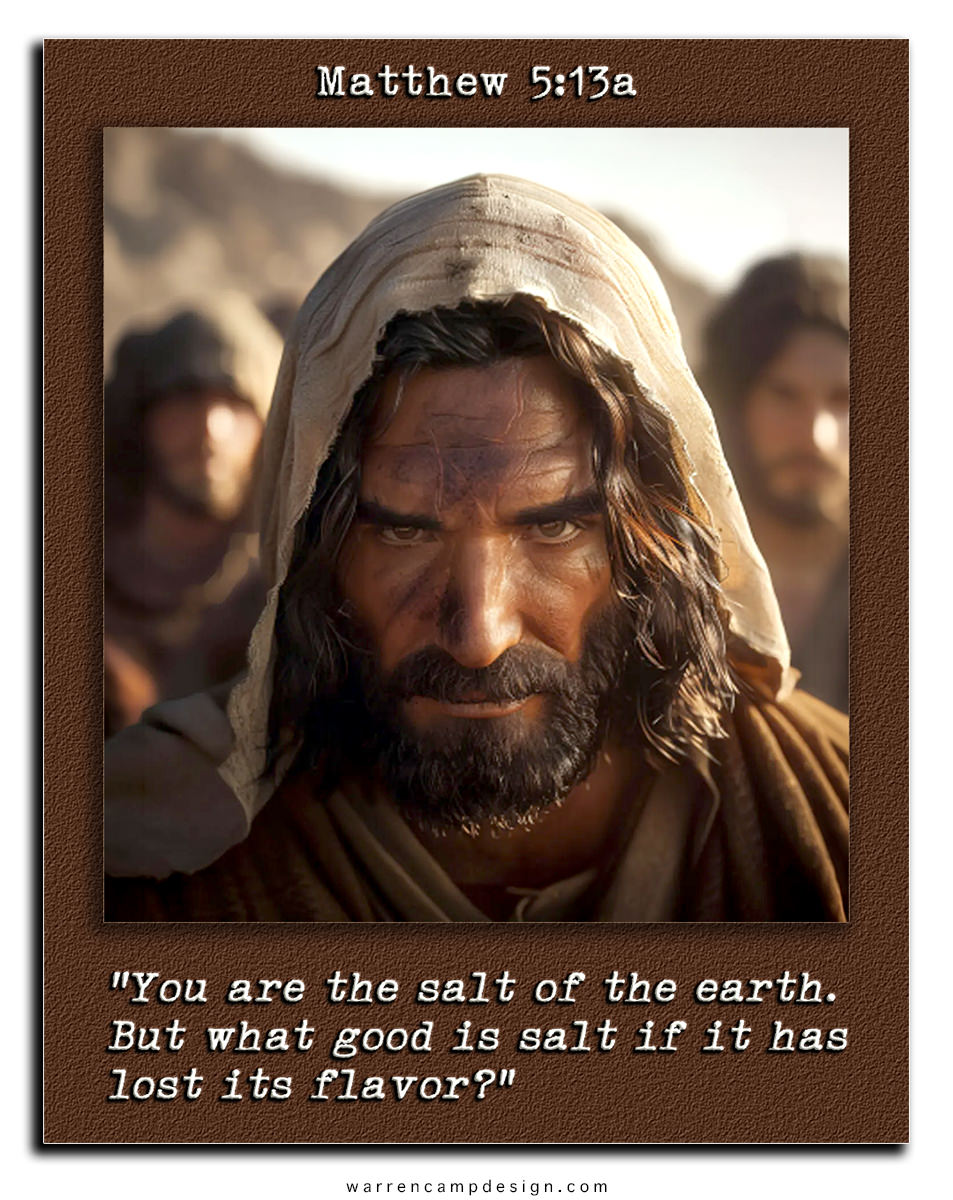
Salt in the ancient world served as a preservative, seasoning, and sometimes even as a fertilizer. Jesus uses this metaphor to illustrate that believers are called to preserve what is good, prevent moral decay, and enhance the world with godly influence. If salt loses its saltiness (i.e., if believers lose their distinctiveness and fail to live out their faith), it becomes useless — just as salt that has lost its flavor or purity is discarded. The warning is to remain faithful and distinct, not blending in with the world to the point of losing spiritual effectiveness
Matthew 5:13 teaches that Jesus’ followers are to make a meaningful difference in the world around them. Like salt, they’re to preserve what’s good, resist moral and spiritual decay, and bring something beneficial to the lives of others. Jesus’ warning about salt losing its saltiness emphasizes that his followers must remain distinctive and faithful, rather than becoming indistinguishable from the world.
Light of the World (5:14–16)
“You are the light of the world. A town built on a hill cannot be hidden. Neither do people light a lamp and put it under a bowl. Instead they put it on its stand, and it gives light to everyone in the house. In the same way, let your light shine before others, that they may see your good deeds and glorify your Father in heaven” (vv. 14–16, NIV).
You are the light of the world (v. 14a)
• Believers reflect God’s light and truth in a dark world.
• Like a city on a hill, their faith should be visible and unmistakable.
Let your light shine Jesus describes his followers as the “light of the world,” meant to be visible and illuminate the darkness around them. Like a city on a hill or a lamp on a stand, Christians are meant to be seen, not hidden. Their lives should be marked by good deeds that reflect God’s character and point others to him. The purpose of letting your light shine is so that others may see your good works and give glory to God, not to draw attention to oneself.
Each of us should ask ourselves these essential questions: Would people want what I have by viewing my lifestyle and evaluating my features? Is my life reflecting a thankful, expectant heart, excited about what God will do with me each new day?
Matthew 5:14 teaches that Jesus’ followers are to be a visible witness for God in a world that needs his truth and goodness. Like a city on a hill that cannot be hidden, their faith should be evident through the way they live. Jesus calls his followers to let their lives reflect his light, love, and righteousness rather than hiding their faith. Their presence should help others see and recognize the goodness of God.
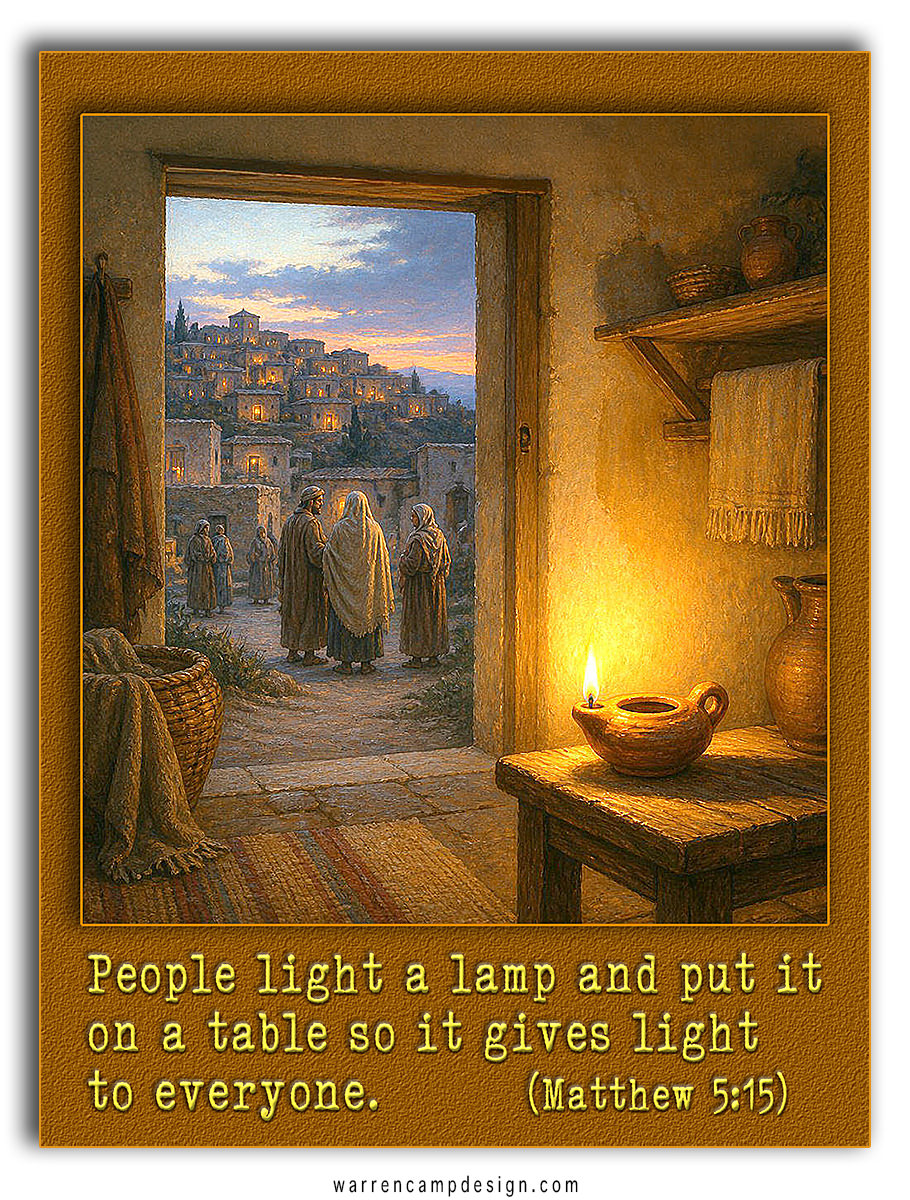
Don’t hide your light (v. 15)
• Hiding your faith is contrary to its purpose.
• Just as a lamp is meant to shine, Christians are meant to shine openly and helpfully.
Herein, Jesus teaches that a lamp is meant to be placed where it can give light to everyone in the house, not hidden where its purpose is lost. In the same way, disciples shouldn’t conceal the faith and Christlike character God is forming in them. Jesus calls his people to live openly enough that their good works help others see the goodness of God.
Matthew 5:15 teaches that a person who receives God’s light shouldn’t hide it from others. Just as a lamp is placed where it can give light to everyone in a house, believers are meant to make their faith visible through their lives. Jesus emphasizes that light is useful only when it’s allowed to shine and illuminate the darkness. Therefore, his followers should openly reflect God’s truth and goodness rather than keeping their faith hidden.
Let your light shine through good works (v. 16)
• Good works are a way to point others to God, not ourselves.
• The goal is not self-praise, but to cause others to glorify God.

Click to enlarge.
Remember this: Everybody can help somebody (v. 16). “Wishing” never gets the job done. If God shows you something that needs to be done, don’t wait for “somebody else” to do it — move with purpose and do what love requires: “Let your light shine before others.”
I once heard a story about four people named Everybody, Somebody, Anybody, and Nobody. An important task needed attention, and Everybody assumed Somebody would handle it. Anybody could have done it, but Nobody did. Somebody was frustrated because it was Everybody’s responsibility. Everybody thought Anybody could do it, but Nobody realized Everybody would do nothing. In the end, Everybody blamed Somebody for what Nobody did, even though Anybody could have done it.
The lesson is simple: when you see a need and God gives you the ability to meet it, don’t merely notice it — answer it. Be grateful for the opportunity, and be the one who acts.
Being a Light for Christ During his earthly life, Jesus issued his own kind of “be the light” challenge, saying that we who follow him are to “let [our] light shine before others” (v. 16). His charge had a loftier goal than encouragement or moral support; instead, our willingness to reveal the light that he’s put in us shows the watching world who God is. The way we live our lives, in both word and deed, reveals the hope Jesus gives us, making it visible to all those around us, like a lamp on a stand.

Click to enlarge and download.
— Matthew 5:16 —
Jesus calls us “the light of the world” and challenges us to illuminate the paths of others with his light radiating through us when they’re walking a dark road. For those who don’t yet know the hope Jesus offers, sharing his light through the way we live can point them toward God as the source of all hope. We’re to be the light of the world! Make sure that your light is shining brightly today and in the days to come.
Jesus encouraged us in v. 16 to let all men see our good and kind deeds so they would recognize and glorify God. He didn’t mean that we should be show-offs or do things for the purpose of being seen; he was encouraging us to realize how much we affect the people around us. Certainly, we can negatively affect others, but generosity always affects those around us in very positive ways, and makes us happy people.
Matthew 5:16 teaches that Jesus’ followers should let their lives visibly reflect God’s goodness. Their good works should demonstrate the love, mercy, truth, and righteousness that come from God. The purpose isn’t to draw attention or praise to themselves, but to let others recognize God through what they see. When believers live in this way, their lives can lead others to glorify their Father in heaven.
Application message: Jesus describes his followers as “the salt of the earth” and “the light of the world” (vv. 13–16). These images remind us that discipleship is never merely private. Those who belong to Christ are placed among other people — in homes, workplaces, neighborhoods, churches, and communities — to reflect the values and character of God’s kingdom.
. . . Salt was valuable in the ancient world and was associated with preserving, seasoning, and usefulness. In the same way, Christians are called to exert a faithful influence wherever God has placed them. This doesn’t require being loud, argumentative, or socially prominent. It means remaining distinct in character: truthful when dishonesty is common, merciful when others are harsh, pure when compromise seems normal, and peacemaking when relationships are strained. If believers lose that distinctiveness by adopting the attitudes and practices of the surrounding world, their witness becomes weakened.
. . . Light makes things visible. Jesus doesn’t say that his disciples must manufacture their own light, but that they’re to let their light shine. As we live openly and faithfully under his lordship, people should be able to see the difference Christ makes. Our “good works” include practical acts of love, integrity, generosity, service, justice, forgiveness, and courage. Yet Jesus gives the purpose plainly: not that people would praise us, but that they’d “give glory to your Father who’s in heaven.”
This passage challenges both concealment and self-promotion. We may be tempted to hide our faith because we fear disapproval, awkwardness, or opposition. On the other hand, we may do outwardly impressive things in the hope of being admired. Jesus calls us to a better path: faithful, visible obedience that points away from ourselves and toward God. Our lives should make the Father’s character more believable and attractive to those who observe us.
Being salt and light also begins in ordinary places. A patient answer, a truthful word, a refusal to participate in gossip, a generous act done without recognition, or a gracious response to someone who’s hurt us may seem small. But God often uses steady, Christlike faithfulness to preserve what’s good, expose what’s wrong, and offer a glimpse of his grace.
Personal response: Where has God placed me to be “salt” and “light” right now, and what would it look like for me to let my faith be seen through one specific act of truth, mercy, courage, or service this week?
Practical Application of This Sermon Passage (5:13–16)
† Believers are called to live out the virtues described in the Beatitudes (Matthew 5:3-12) as the foundation for being salt and light.
† For believers, “salt of the earth” means preserving goodness, preventing moral decay, enhancing godly influence. As “light of the world,” followers of Jesus are to remain visible, illuminate darkness, and reflect God’s character through their good deeds.
† The effectiveness of salt and light depends on engagement with the world, not withdrawal from it. Christians are to be involved in their communities and workplaces, living distinctively and influencing others for Christ.
† The ultimate goal is that others will see the difference in believers’ lives and be drawn to glorify God.
Conclusion
Matthew 5:13–16 calls Christians to embrace their God-given identity as salt and light. This means living in such a way that preserves what’s good, stands out in moral distinctiveness, and actively points others to God through visible acts of goodness and righteousness.
- Q. 1 What does losing your saltiness or hiding your lamp reveal about your spiritual effectiveness?
- Q. 2 How can your good deeds lead others to glorify God according to these verses?
- Q. 3 Are there any consequences if you neglect your calling to become salt and light in the world?
Are you ready to take Warren’s 25-question Sermon on the Mount quiz? Answers with Bible references are included with your grade.
† Watch this video of chapter 5 created by Jesus Film Project (vv. 1–48; 8 minutes).