Matthew’s Account: Jesus’ “Sermon on the Mount” . . .
Introduction / Questions / Answers / Commentary by Warren
The Sermon on the Mount is Matthew’s most extensive record of Jesus’ teaching concerning the arrival of God’s kingdom, and it announces that God’s presence and blessing are available to everyone who responds to him in faith.
Jesus Said 2,000 Words That Changed Human History
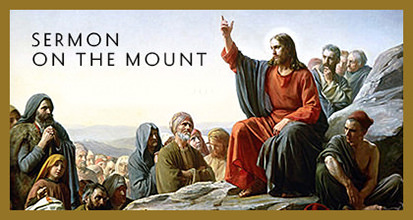
Welcome! Here’s my comprehensive introduction to Jesus’ dynamic, life-changing Sermon on the Mount. I’ve organized it into clear sections, covering the key themes and adding relevant Bible references.
The Sermon on the Mount, recorded in Matthew 5–7, stands as a foundational discourse of Jesus Christ, encapsulating the essence of kingdom living. More than a collection of moral teachings, Jesus’ sermon gives us a radical redefinition of righteousness. The Lord’s teaching continually challenges superficial religion and calls for a profound transformation of the heart. Having ascended a mountain to teach, Jesus unveils divine wisdom, pointing to a higher standard of love, humility, and genuine faith.
The Sermon on the Mount isn’t merely a collection of admirable teachings; it’s Jesus’ call to live as citizens of his kingdom. Matthew 5 reveals the character and righteousness of kingdom people; Matthew 6 directs their hearts toward the Father rather than human approval or worldly anxiety; and Matthew 7 calls them to humble discernment, trusting prayer, loving action, and practical obedience. The question running through the sermon isn’t simply, “What does Jesus teach?” but, “Will I build my life on his words?”

Click to enlarge Matthew 4:10.
In Matthew chapter 4, the gospel writer tells us that Jesus was tested three times by the devil (enlarge image); each time he answered Satan by faithfully quoting and obeying God’s Word. Later in the chapter, Matthew presents Jesus as beginning his public ministry throughout Galilee. The chapter ends by telling us that Jesus called his first disciples and healed many who were sick and afflicted.
As Jesus’ ministry expands, his disciples come to him on the mountain, where he begins to teach them. Although the sermon is addressed to the disciples, the surrounding crowds also hear Jesus’ teaching and are astonished by his authority (Matt. 7:28–29).
This Sermon on the Mount, beginning in chapter 5, is a collection of spiritual and moral principles that Jesus expects those who follow him to hear, trust, and obey. Watch this video clip by Jesus Film Project that depicts the start of Jesus’ famous sermon (vv. 1–16; 2.5 minutes).
The first portion of the Sermon on the Mount is known as the Beatitudes, which means “The Blessings.” But, as David Guzik sees it, “The Beatitudes can also be understood as giving the believer his “be – attitudes” — the attitudes he should “be.” In the Beatitudes, Jesus sets forth both the nature and the aspirations of citizens of his kingdom. They have and are learning these character traits.
“All of these character traits are marks and goals of all Christians. It is not as if we can major in one to the exclusion of others, as is the case with spiritual gifts. There is no escape from our responsibility to desire every one of these spiritual attributes. If you meet someone who claims to be a Christian but displays and desires none of these traits, you may rightly wonder about their salvation, because they do not have the character of kingdom citizens. But if they claim to have mastered these attributes, you may question their honesty.”
Jesus’ most well-known words These words shaped the lives of billions of people throughout history: “You are the salt of the earth” (Matt. 5:13); “Love your enemies and pray for those who persecute you” (5:44); “Do to others what you would have them do to you” (7:12); “No one can serve two masters” (6:24); and “Your will be done, on earth as it is in heaven” (6:10).
Structure of the Sermon on the Mount
The Sermon on the Mount can be divided into three main sections:
- Opening descriptions of the blessed character and identity of kingdom citizens — the Beatitudes
- The main body of the speech describing the nature and activity of right relationships with God and others, shaped by wholehearted love and obedience
- A conclusion that invites listeners to choose how they’ll respond to Jesus’ words
Chapter 5 of Matthew’s Gospel . . . Kingdom Character in a Broken World
Watch BibleProject’s superb video.
The sermon opens with the Beatitudes (Matthew 5:3–12), a series of blessings pronounced upon those who embody counter-cultural virtues. “Blessed are the poor in spirit,” Jesus declares, “for theirs is the kingdom of heaven.” This first blessing immediately sets the tone, highlighting dependence on God rather than self-sufficiency. The remaining Beatitudes speak of those who mourn, the meek, those who hunger and thirst for righteousness, the merciful, the pure in heart, peacemakers, and those persecuted for righteousness’ sake. Each Beatitude reveals an aspect of true discipleship, promising God’s favor and the future fulfillment of his kingdom promises, fundamentally shifting our understanding of what it means to be truly blessed.
Notes about “Beatitudes”:
(1) The Beatitudes are eight declarations of blessedness with which Jesus opens the Sermon on the Mount. The word “blessed” refers to more than a superficial happiness; in this context, blessed refers to a state of spiritual well-being under God’s favor. The Beatitudes describe the character and blessedness of Jesus’ disciples, both present and future. The person described in these verses has a different quality of character and lifestyle than those still “outside the kingdom.”
(2) Several early English Bible translations render the Greek word makarios in the Beatitudes as “happy” instead of “blessed.” Some examples include the Emphatic Diaglot (1864), the Young’s Literal Translation (1862), the Julia Smith Translation (1876), and Rotherham’s Emphasized Bible (1872). While “blessed” is the more common translation, “happy” captures an aspect of the word’s sense, though “blessed” is usually preferable in this context. Makarios signifies a state of well-being, often associated with divine favor and joy. While many English translations use “blessed,” some have opted for “happy.”
Following the Beatitudes, Jesus describes his disciples as “salt and light” (5:13–16). He declares that they are the salt of the earth and the light of the world. They are not to hide their light but to let it shine before others, “that they may see your good deeds and glorify your Father in heaven.” This imagery underscores the active and visible role believers are to play in the world, demonstrating their faith through righteous living and directing others toward God’s glory.
A significant portion of the sermon addresses Jesus’ relationship to the Law (5:17–48). He emphatically states, “Do not think that I have come to abolish the Law or the Prophets; I have not come to abolish them but to fulfill them.” Far from negating the Old Testament, Jesus brings the Law and the Prophets to their intended fulfillment and reveals the heart-righteousness to which they point. True righteousness goes beyond mere external adherence to the letter of the law. He applies commands such as “You shall not murder” to include anger and insulting one’s brother (vv. 21–22), and “You shall not commit adultery” to encompass lustful thoughts (vv. 27–28). This radical internalizing of the Law reveals God’s desire for purity of heart and motive, not just outward conformity.
Jesus’ Righteousness Teaching continues by addressing issues of oaths, retaliation, and love for enemies. He challenges the common practice of swearing oaths by urging simple truthfulness: “Let your ‘Yes’ be ‘Yes,’ and your ‘No,’ ‘No’” (vv. 33–37). He addresses the misuse of the “eye for an eye” principle, advocating a personal response marked by nonretaliation, generosity, and trust in God rather than vengeance (vv. 38–42). The Old Testament principle of proportional justice restrained personal revenge and belonged to Israel’s legal system; Jesus calls his disciples away from personal retaliation. Most profoundly, he commands his followers to “love your enemies and pray for those who persecute you” (vv. 43–48), a revolutionary concept that goes against fallen human instinct and reflects the boundless love of God. This teaching culminates in the call to be “perfect, therefore, as your heavenly Father is perfect."
Application message: Jesus begins by reshaping our understanding of blessing, righteousness, and influence. In God’s kingdom, true blessedness isn’t found in self-sufficiency, recognition, comfort, or power, but in humble dependence on God, hunger for what’s right, mercy toward others, purity of heart, and faithfulness under pressure.
Matthew 5 calls us to ask whether our lives display the character Jesus describes — not merely in public behavior, but in the desires, attitudes, words, and relationships that others may not see. As Christ’s followers, we’re to be “salt” and “light”: preserving what’s good, pointing people toward God, and letting our conduct make the Father’s goodness visible.
The chapter also presses righteousness beneath the surface. Avoiding murder is’t enough if we harbor anger; avoiding adultery isn’t enough if we cultivate lust; loving friends isn’t enough if we refuse to love enemies. Jesus calls us to a heart transformed by the Father’s grace.
Personal response: Where is Jesus inviting me to pursue the deeper righteousness of a changed heart rather than settling for outward religious correctness?
Chapter 6 . . . Living Before the Father
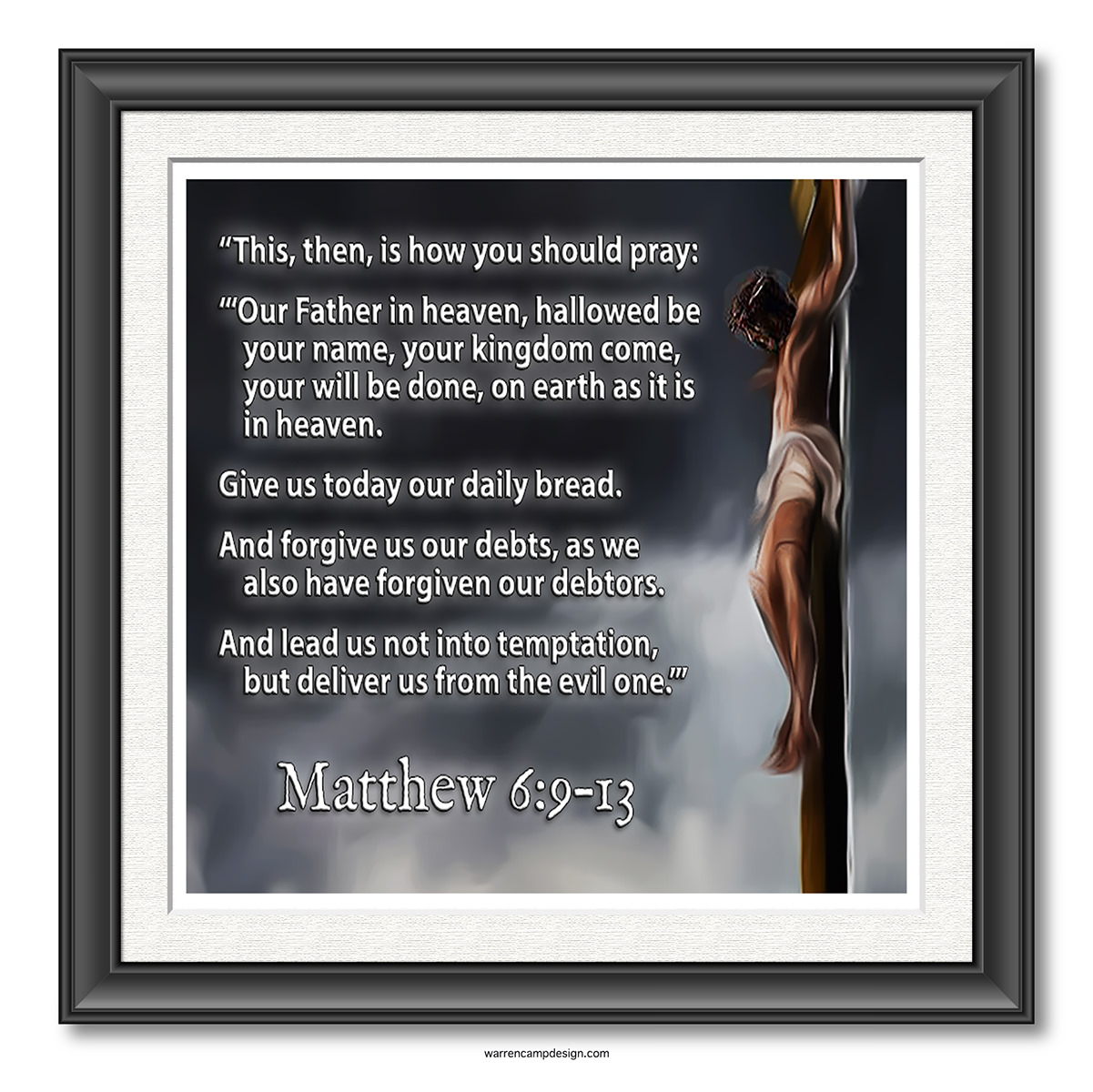
Click to enlarge Matthew 6:9–13.
In this chapter of Matthew’s gospel account, Jesus shifts to the practice of righteousness in secret, warning against performing religious duties for human recognition and applause.
Jesus speaks of giving to the needy, praying, and fasting, emphasizing the importance of a private relationship with God over public display: “But when you give to the needy, do not let your left hand know what your right hand is doing, so that your giving may be in secret” (6:3–4). Similarly, concerning prayer, he instructs, “when you pray, go into your room, close the door and pray to your Father, who is unseen” (vv. 5–6), and provides the disciples with the model prayer, commonly known as the Lord’s Prayer (vv. 9–13, enlarge image). This section highlights the sincerity of one’s devotion and the true audience of spiritual acts.
Jesus then addresses the issue of material possessions and anxiety. He warns against accumulating earthly treasures that are fleeting, encouraging instead the storing up of “treasures in heaven” (vv. 19–21). He declares that “no one can serve two masters” (v. 24), emphasizing the impossibility of serving both God and money. This leads into his profound teaching against anxious preoccupation with life’s necessities: “Therefore I tell you, do not worry about your life, what you will eat or drink; or about your body, what you will wear” (vv. 25–34). He points to the birds of the air and the lilies of the field as examples of God’s provision, culminating in the exhortation to “seek first his kingdom and his righteousness, and all these things will be given to you as well.”
Application message: Matthew 6 teaches us to live for the Father’s approval rather than the attention, praise, or security offered by the world. Jesus addresses giving, praying, fasting, money, anxiety, and our priorities because each of these areas reveals whom we truly trust and serve. The central invitation is to bring our lives into the Father’s presence. We may pray honestly because he knows our needs; we may give quietly because he sees what’s done in secret; and we may release anxious striving because our heavenly Father cares for us. Jesus doesn’t deny that we have real needs, but he tells us not to be ruled by them.
“Seek first the kingdom of God and His righteousness” isn’t a call to neglect ordinary responsibilities. It’s a call to place God’s reign, his will, and his priorities above the pursuit of possessions, status, and control. When the Father becomes our treasure, other concerns find their proper place.
Personal response: What am I most tempted to seek first — human approval, financial security, control over the future, or the kingdom of God and his righteousness?
Chapter 7 . . . Hearing Jesus and Doing His Words
Matthew 7 begins with a warning against hypocritical, self-righteous judgment: “Do not judge, or you too will be judged” (7:1–5). Jesus illustrates this with the metaphor of seeing a speck in someone else’s eye while ignoring the plank in one’s own. This calls for humility and self-reflection before criticizing others, emphasizing the need to address one’s own shortcomings first. It does not forbid all moral discernment, as v. 6 and the warnings about false prophets later in the chapter make clear. He then encourages persistence in prayer, promising, “Ask and it will be given to you; seek and you will find; knock and the door will be opened to you” (vv. 7–11), reassuring his disciples of the Father’s generous goodness to prayer.
The Golden Rule is presented as a summary of the Law and the Prophets: “So in everything, do to others what you would have them do to you” (v. 12). This concise yet profound principle encapsulates the ethical demands of God’s kingdom and provides a practical guide for all human interactions. Jesus then warns of two gates and two ways, emphasizing that the path to life is narrow and few find it, while the path to destruction is broad and many enter through it (vv. 13–14).
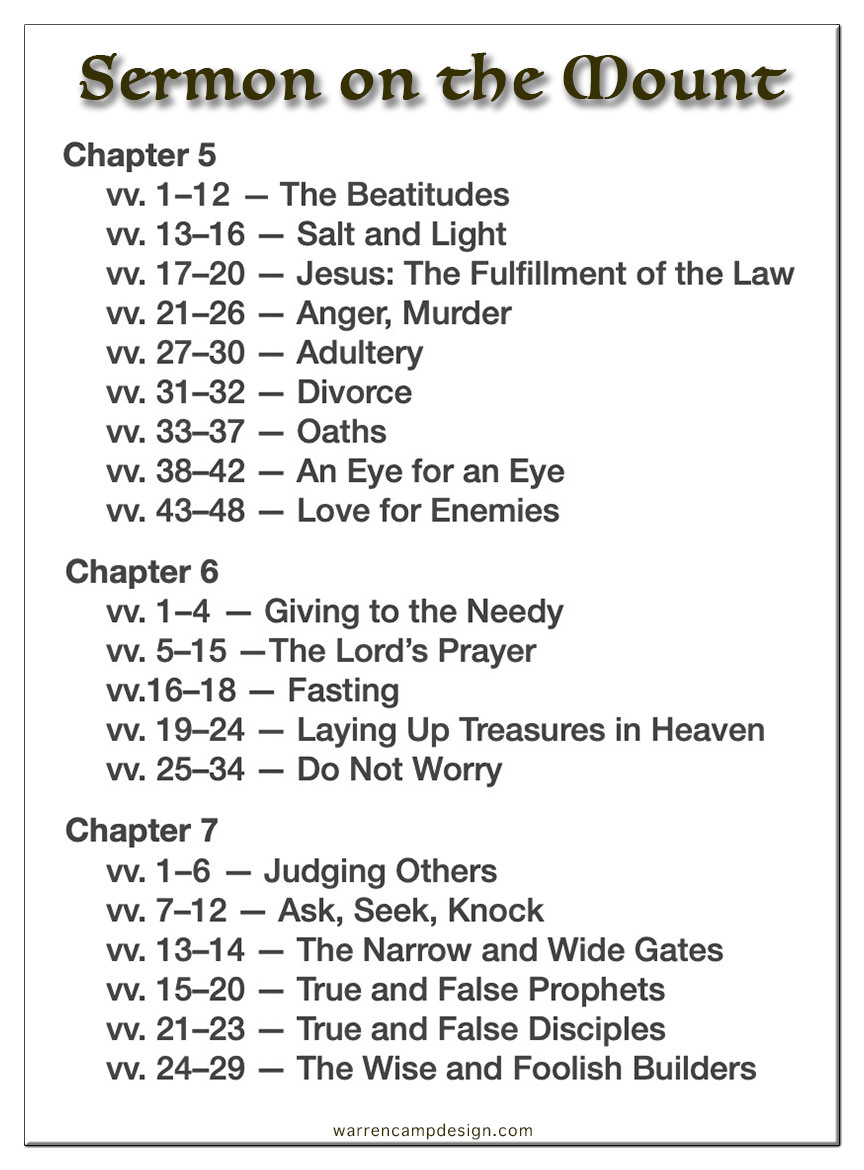
Click to enlarge this “Passages” list.
The sermon concludes with warnings against false prophets and a powerful parable about two builders (vv. 15–27). Jesus instructs his followers to recognize false teachers by their “fruit,” signifying that genuine faith is evidenced by the observable outcome of one’s teaching and life. The parable of the two builders illustrates the crucial importance of hearing Jesus’ words and putting them into practice. The wise builder constructs his house on solid rock, enabling it to withstand storms, while the foolish builder builds on sand, leading to its collapse. This serves as a stark reminder that true discipleship isn’t merely hearing, but actively obeying, solidifying one’s spiritual foundation on the unshakable truth of Christ’s teachings.
In essence, the Sermon on the Mount is a blueprint for radical discipleship, calling believers to a higher standard of righteousness that originates from a transformed heart. It’s a timeless message that continues to challenge and inspire, inviting all to live lives characterized by love, humility, purity, and unwavering obedience to the will of God, reflecting the very nature of their heavenly Father.
Application message: Matthew 7 calls us to practice humble discernment, persistent prayer, merciful treatment of others, and obedient faith. Jesus warns us against condemning others while ignoring our own sin, yet he also teaches us to recognize what’s false and to make wise spiritual judgments. Christian humility isn’t careless acceptance of everything; it’s honest self-examination joined with truth and love.
Jesus encourages his disciples to ask, seek, and knock with confidence in the Father’s goodness. We don’t pray to persuade an unwilling God, but to depend upon a Father who gives good gifts to his children. This dependence must then appear in the way we treat people: “Whatever you want others to do for you, do also to them.”
The sermon concludes with a serious choice. There are two ways, two kinds of teachers, two kinds of disciples, and two foundations. Hearing Jesus’ words without obeying them is like building a house on sand. The wise person receives Christ’s teaching, trusts him, and puts his words into practice — even when obedience is costly.
Personal response: In what specific area do I need to move from admiring Jesus’ teaching to actively obeying it?
This 5-minute video highlights Jesus’ teaching of his “Sermon on the Mount,” compliments of BibleProject.
Although the Sermon on the Mount contains only three chapters, its teaching has challenged and shaped Christ’s followers through the centuries. Jesus doesn’t merely call us to admire his wisdom; he calls us to hear his words, build our lives upon them, and live as faithful citizens of his kingdom.
In Warren’s collection of commentaries, you can learn more about the central message of Jesus’ teaching while you explore related videos, Q & A’s, relevant Scripture pictures, a 25-question Sermon on the Mount quiz, and additional study resources.