Join us this September on your remote study of John’s three epistles. (Follow the menu above.)
Apostle John’s Three Letters . . . 1 John 3:4–10
Righteousness and Sin
What does sin reveal about the direction of our lives? John’s answer is searching: Sin isn’t merely a mistake or an unfortunate weakness; it’s rebellion against God’s will. Yet Christ appeared to take away sin and to destroy the devil’s work, so those who belong to Jesus are called to live increasingly in the righteous character of their Father.
In the preceding passage, John celebrated the Father’s great love for his children and called believers to purify themselves in hope of Christ’s appearing. He now explains why purity matters. Those who’ve been born of God aren’t indifferent to sin. They recognize sin as lawlessness and seek to live in a way that reflects the righteous character of Christ.
First John repeatedly addresses genuine fellowship with God, assurance, obedience, love for fellow believers, and faithfulness to the truth about Jesus. While John writes in the context of false teaching, his concern isn’t merely to expose error in other people. He calls every reader to examine whether his or her profession of faith is expressed in a life increasingly shaped by Christ.
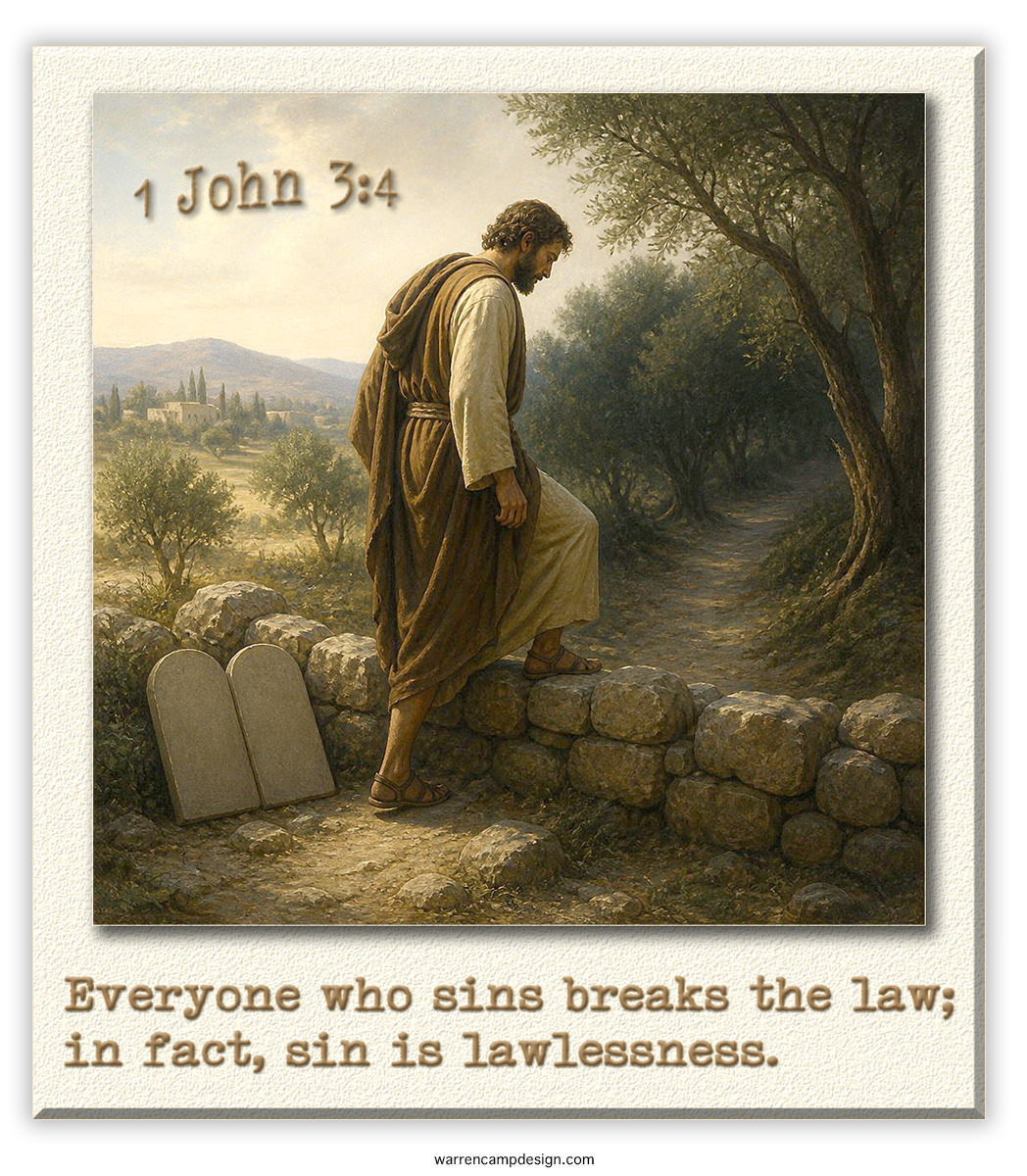
John isn't teaching sinless perfectionism; rather, he’s offering a moral diagnostic test. A Christian may stumble and sin, but someone who embraces sin as a comfortable, unrepentant lifestyle reveals a heart that’s not been transformed by God.
Clearly, John doesn’t teach that Christians never sin. Earlier, he assured believers that Jesus Christ is their Advocate when they do sin and that God forgives those who truly confess their sins (1:9; 2:1–2). He’ll now warn us in the today’s seven verses (3:4–10), issuing his sternest warnings against unrepentant, habitual sin. He anchors his argument in the character of sin, the purpose of Christ's incarnation, and the reality of our spiritual parentage. John dismantles any notion that a person can claim fellowship with God while comfortably making a lifestyle out of lawlessness.
Ultimately, John’s warning is designed to shatter the self-deception of false teachers and nominal believers who thought they could separate “faith” from “behavior.” He insists that true grace doesn”t give license to sin; it transforms the sinner’s direction.
Sin is serious! It’s “lawlessness” (v. 4): It resists God’s rightful rule and holy will. But the passage isn’t only a warning. Christ came “to take away our sins” (v. 5) and “to destroy the devil’s work” (v. 8). Those who belong to him are to resist sin, pursue righteousness, and live as children of God.
In the previous passage — “Father God’s Love for Us” (2:28–3:3), we virtually crossed Apostle John’s “Epistle Bridge,” seamlessly moving the reader smoothly from the defensive warnings of chapter 2 into the distinct behavioral identity markers outlined in chapter 3. We’ll see herein John’s beautiful review of the greatness of God’s love toward us as we become his dear children who are no longer slaves to sin. Today, beginning at 3:4, John provides reasons not to sin (vividly shown in this BibleProject video titled “Khata/Sin”)

Jesus appeared on our behalf to take away our sins and destroy Satan’s stronghold. John notes that true sons and daughters of God don’t continue their sinful ways, because they’ve been given a rebirth by and for God. This chapter ends by reminding us to follow Jesus’ example of love that expresses itself in truth and actions (shown here). We’ll then be encouraged to prevent our hearts from condemning us because “God is greater than our hearts, and knows everything” (3:20).
Removal of Sin, Thanks to Jesus (1 John 3:4–7)
At the end of John’s “bridge” passage, he writes, “All who have this hope in him purify themselves, just as he is pure” (3:3). John now explains why purity matters (3:4–7). Sin is serious because it opposes God’s holy will, but Christ appeared to take away sin and to form a righteous people who reflect his character.
4Everyone who sins breaks the law; in fact, sin is lawlessness. 5But you know that he appeared so that he might take away our sins. And in him is no sin. 6No one who lives in him keeps on sinning. No one who continues to sin has either seen him or known him (1 John 3:4–6).
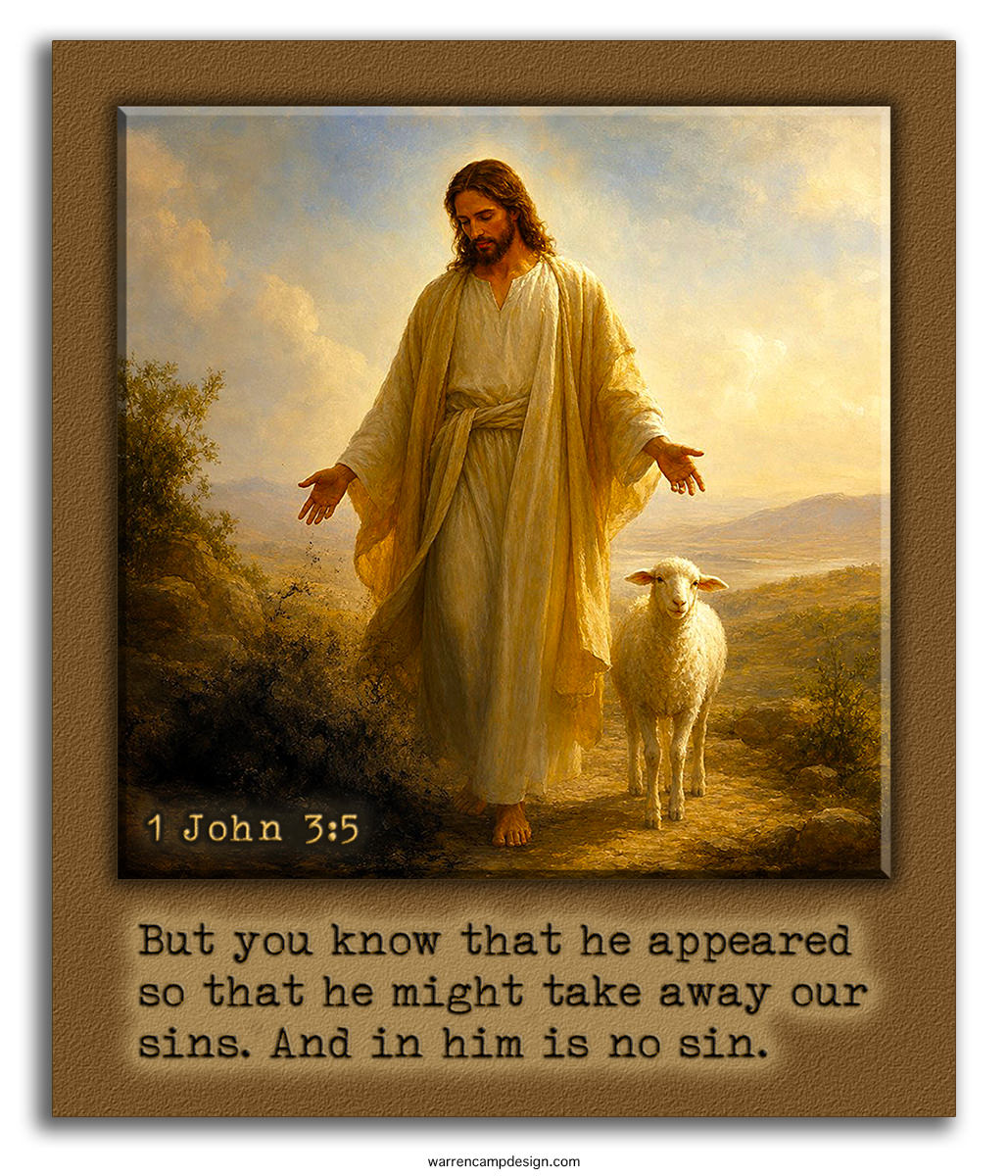
John defines sin as “lawlessness.” Sin isn’t merely a mistake, weakness, or failure to meet our own standards. It’s rebellion against God’s rightful rule. Whenever we sin, we act contrary to the character and will of the God who made us.
Verse 5 gives the great hope of the passage: Christ “appeared so that he might take away our sins.” Jesus alone was without sin, yet he gave himself to deal with the guilt and power of sin. We can’t cleanse ourselves or pay our own sin debt; forgiveness and cleansing come solely through Christ.
John doesn’t teach that genuine believers never commit individual acts of sin. Earlier, he writes that believers who claim to be without sin deceive themselves, and he points them to Jesus Christ, their Advocate, when they do sin (1 John 1:8–9; 2:1–2). His warning here is different: Believers must never accept a settled, continuing pattern of sin that’s accepted, defended, and pursued without repentance.
To abide in Christ is to remain in fellowship with the One in whom there’s absolutely no sin. Therefore, believers can’t be comfortable with sin as a chosen way of life. When Christians sin, they’re called to bring it into Christ’s light, confess it honestly, receive his forgiveness, and turn again toward obedience.
7Dear children, do not let anyone lead you astray. The one who does what is right is righteous, just as he is righteous (1 John 3:7).

Click to enlarge and print
Jesus in chapter 3.
In v. 7, John delivers a direct, practical caution to his readers. This verse serves as a crucial anchor against moral confusion. When unpacked, it reveals profound truths about how the New Testament connects Christ’s finished work on the cross to the daily transformation of a believer’s life. John reminds us that Christianity isn’t merely a set of beliefs we intellectualize; it’s a living, breathing transformation. Christ’s grace is so powerful that it doesn’t just forgive our past — it actively reshapes our present, turning our hearts away from the wreckage of sin, toward the beauty of walking with God.
Here he again addresses his readers affectionately and warns them not to be deceived. Righteousness isn’t established by a claim, a religious label, or special knowledge. It’s seen in conduct. The person who practices what’s right shows a life increasingly shaped by the righteous character of Jesus.
This doesn’t mean anyone becomes righteous before God by personal merit. Scripture is clear that no one is righteous in himself or herself (Romans 3:10). Rather, those who’ve been made right with God through Christ increasingly bear the fruit of righteousness in their daily lives. Christ’s saving work doesn’t leave us unchanged; it leads us away from sin and toward obedient living.
Before we explore the second segment of todays passage, we ought to make note of each verse’s parallel verse (adapted from The Letters of John by John R W Stott).
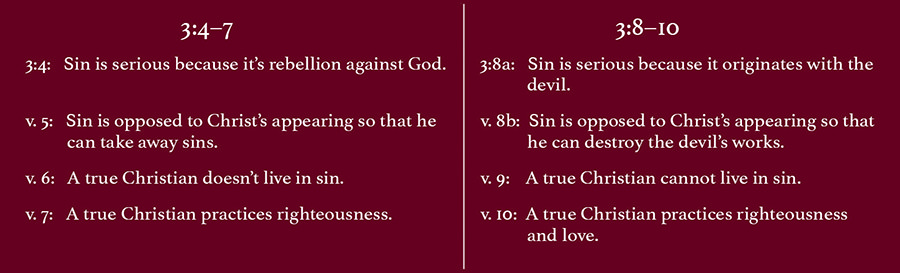
Those Born of God Practice Righteousness and Love (1 John 3:8–10)
Clearly, John emphasizes two main points here: (1) Christ came to destroy Satan’s work, and (2) new birth produces a life that increasingly reflects God’s righteousness and love. The apostle now states a sharp contrast. A continuing pattern of sin belongs to the devil’s work, but the Son of God appeared to destroy that work. Those who’ve been born of God are therefore called to display a different family resemblance: righteousness and love.
8The one who does what is sinful is of the devil, because the devil has been sinning from the beginning. The reason the Son of God appeared was to destroy the devil’s work. 9No one who is born of God will continue to sin, because God’s seed remains in them; they cannot go on sinning, because they have been born of God. 10This is how we know who the children of God are and who the children of the devil are: Anyone who does not do what is right is not God’s child, nor is anyone who does not love their brother and sister (1 John 3:8–10).
John’s language is serious. The person who makes sin a settled and unrepentant pattern of life shows allegiance to the devil, who “has been sinning from the beginning.” John isn’t speaking about a believer’s individual failures, for he’s already taught that Christians must confess sin and rely on Jesus Christ as their Advocate (1:8–9; 2:1–2). Now his concern is a life in which sin is accepted, pursued, and defended.
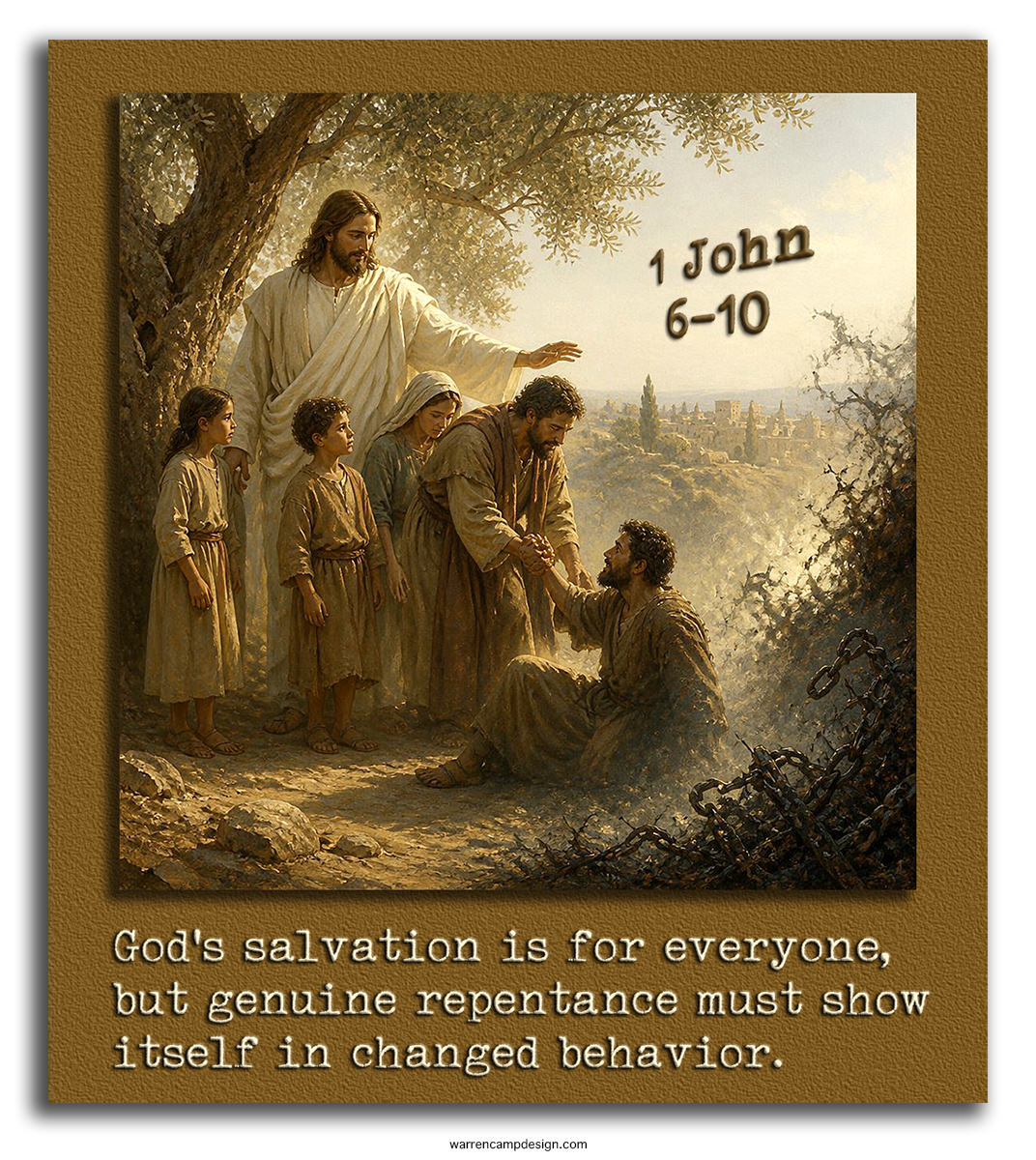
Multitudes of people today are held hostage in their minds by the devil. They’re incarcerated, locked up and caged in their minds and emotions, held like slaves or prisoners who are under arrest and live at the mercy of their conqueror. But John assures us gives the good news in v. 8: “The reason the Son of God appeared was to destroy the devil’s work.” Jesus came to deal with sin and to break the power of the devil’s rebellion. Through Christ, believers are no longer called to live under sin’s rule. They’re able to resist the devil, submit themselves to God, and walk in the freedom Christ provides.
According to Rick Renner, the word “destroy” is taken from the Greek word luo, which refers to the act of untying or unloosing something. It was used in classical Greek literature to refer to people being delivered, released, or freed from difficulties, burdens, or needs. “In the New Testament,” Renner tells us, “ the word luo was used to depict the untying of the thongs of a sandal (Mark 1:7); the unfastening of a donkey’s colt (Matthew 21:2); the loosening, unraveling, and removal of Lazarus’s grave clothes (John 11:44); and the taking away of Paul’s chains (Acts 22:30). But luo also means to break or destroy (Rev. 5:2) where we’re told that Jesus is worthy to loosen or ‘break the seven seals.’” [Rick Renner unlocks an amazing cache of rich, enduring treasures mined from deep within the Word in his books. Find more about them here.]
Thankfully, because Jesus defeated Satan and sin, on the cross, Christians who’ve put their faith in Jesus are no longer to habitually commit sin. We’re told in James 4:7 to “Submit yourselves, then, to God. Resist the devil, and he will flee from you.” Following that two-part command, when we live according to our Master’s will, Satan cannot control us! In v. 9, we see the phrase “born of God,” possibly referring to the concept of “new birth or identity” that he spotlights in John 3:7. When people become Christians, God makes them new creatures with new natures (2 Cor. 5:17).

Click to watch this video clip
by BibleProject.
This change isn’t merely external behavior or religious effort. God’s work reaches the heart and increasingly produces righteous conduct. The Holy Spirit continues to shape believers so that their lives bear the character of their heavenly Father.
Also in verse 9, John explains why a child of God can’t go on living comfortably in sin: “God’s seed remains in them.” John’s image of God’s seed points to the transforming reality of new birth. Those born of God receive a new identity and a new direction. Although their lives aren’t sinless, sin no longer fits who they are or who they’re becoming in Christ.
While both Scriptures from James and 2 Corinthians are useful supporting verses, John’s argument must remain the priority: Christ came to destroy the devil’s plans and performances, and new birth in believers produces a life that increasingly reflects God’s righteousness and love.
Verse 10 summarizes John’s test. The distinction between God’s children and the devil’s children isn’t based on religious claims, church involvement, knowledge, or family background. It’s demonstrated in a life that practices what’s right and loves fellow believers.
John refuses to separate righteousness from love. A person can’t claim to know God while persisting in unrighteousness, and neither can a person claim to belong to God while refusing to love a brother or sister in Christ. Both righteous conduct and Christlike love are evidence that God’s life is at work within us.
The Essence of First John, Chapter 3
Click to enlarge: “Love, in Acts 3.”
John draws a serious contrast between the children of God and those who remain under the influence of the devil and his work. God’s children are increasingly recognized by two related marks: (1) They intentionally practice what’s right and (2) they love their brothers and sisters in Christ. A settled refusal to practice righteousness or to love fellow believers contradicts a person’s claim to belong to God.
The apostle will state the matter even more plainly in the next section: Persistent hatred toward a brother or sister reveals that a person remains in death. In contrast, believers show that they’ve passed from death to life by loving one another (3:14). Christian love is not merely a feeling; it’s visible in a continuing commitment to seek the good of God’s people.
First John 3 therefore develops the moral and relational tests John has already introduced. In 3:4–10, he emphasizes that those born of God don’t make sin their settled way of life but increasingly practice righteousness. In 3:11–24, he’ll show that this new life also expresses itself in practical, Christlike love for fellow believers.
† Summary and Key Points of 1 John 3:4–10
John teaches that sin is lawlessness; it stands opposed to God’s holy will. Christ came to take away sin and destroy the devil’s work. Therefore, those born of God don’t make sin their customary pattern of life; instead, they increasingly practice righteousness and love fellow believers.
• Sin is lawlessness, but Christ came to take away sin (vv. 4–5). Jesus is sinless, and his appearing reveals both the seriousness of sin and God’s remedy for it.
• Those who abide in Christ cannot be at peace with habitual sin (vv. 6–9). John isn’t teaching sinless perfection; he warns against a continuing, unrepentant pattern of sin.
• God’s children are identified by righteousness and love (v. 10). A life increasingly marked by doing what’s right and loving fellow believers displays the transforming work of new birth.
- Q. 1 What does John mean in vv. 6 and 9 when he says that one born of God doesn’t “keep on sinning” or “go on sinning”? How is this different from claiming that a Christian never commits a sin?
- Q. 2 According to v. 10, what two characteristics distinguish the children of God from the children of the devil?
- Q. 3 During the past week, have your choices, attitudes, and relationships increasingly reflected the righteous character and love of your heavenly Father? Where do you need to confess sin and take a bigger step toward obedience?
1 John 3:4–10 (NIV)
Read the passage in another Bible version or listen to 1 John, chapter 3, read by Max McLean.
Summary Video
Watch this BibleProject overview of 1, 2, and 3 John.
Review and Prepare
Quiz time! Take Warren’s “John’s Three Epistles Quiz” now — or bookmark it and take it later.
You may also see Warren’s other Bible-study quizzes.