Join us this fall on your remote study of John’s three epistles. (Follow the menu above.)
Apostle John’s Three Letters . . . 1 John 2:1–6
Our Sins, God’s Commands
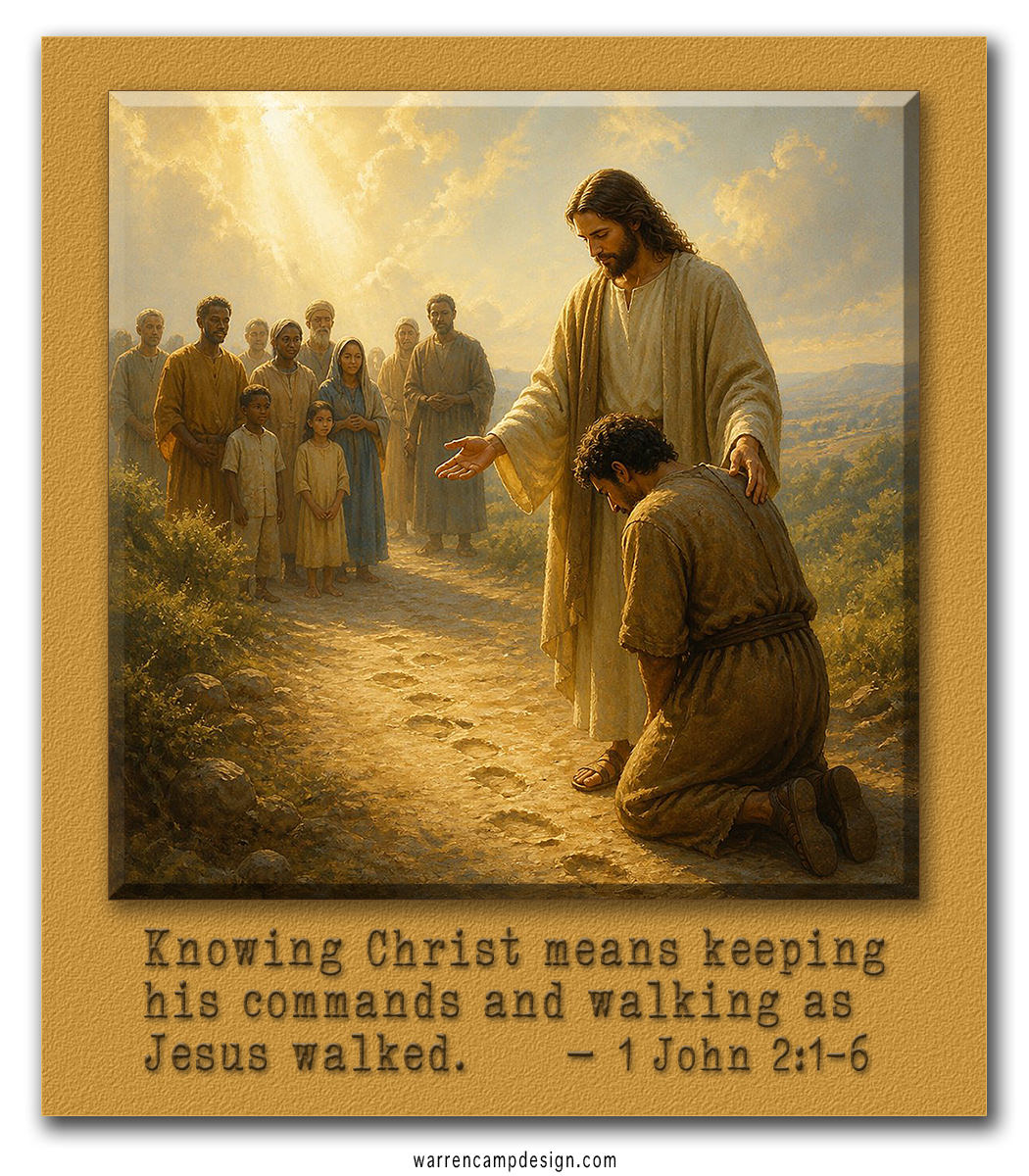
What do you do when you know you’ve sinned — and you want to be right with God again? John doesn’t leave believers in guilt or uncertainty. He points us to Jesus Christ, our righteous Advocate before the Father, and then calls us to show that we truly know him by walking in obedience to his commands.
We saw in last week’s summary (1:5–10) that Apostle John contrasted “darkness and light” to describe sinful living and fellowship with God. God is light, and there’s no darkness in him. When sin enters our lives, we shouldn’t hide it, excuse it, or deny it. We’re called to confess it — to agree with God that our sin is contrary to his will — and receive the forgiveness and cleansing he graciously provides.
When the Holy Spirit makes us aware of sin, we should respond honestly and without delay. God calls us to take sin seriously because it harms us, wounds others, and disrupts our enjoyment of fellowship with him. But we needn’t respond in fear or despair. Believers who confess their sins and turn again toward the Lord find that he’s faithful to forgive, cleanse, and restore them.
In today’s six verses, John moves from confession and forgiveness to Jesus’ ongoing ministry on behalf of his people. He writes so that we’ll not sin; yet “if anybody does sin,” we have “an advocate with the Father — Jesus Christ, the Righteous One.” Jesus is also “the atoning sacrifice for our sins.” Having shown us God’s provision for sin, John calls us to the evidence of knowing Christ: obeying his commands and living as Jesus did.
First John was written to believers who needed assurance and needed to recognize what genuine fellowship with God looks like. John doesn’t teach that we earn salvation through obedience. Rather, he teaches that obedience is the fruit of truly knowing Christ. Before turning to love for fellow believers in v. 7 and following, he first directs our attention to sin, Christ’s advocacy, and the commands of God.
Thankfully, through faith in Christ, we’re made new (2 Cor. 5:17). Yet, until the Lord completes his work in us, we still face temptation and sometimes sin. Walking in darkness should never be our chosen pattern of life, but a believer’s failure doesn’t mean that God has abandoned him or her. Through confession and Christ’s faithful advocacy, we’re called back into open, joyful fellowship with the Father.
Our opening passage has a strong central emphasis: John neither minimizes sin nor leaves believers without hope. He points us to Jesus Christ — the Righteous One — who’s our Advocate with the Father and the atoning sacrifice for our sins.
The Atoning Sacrifice and Our Advocate (1 John 2:1–2)
As we learned in week 2’s summary, some people connected with the churches were making false claims about knowing God while resisting the moral demands of following him. John’s letter confronts such errors directly. He insists that genuine faith in Jesus changes how we live. We can’t claim to know God while treating sin lightly or refusing to obey his commands.
2 1My dear children, I write this to you so that you will not sin. But if anybody does sin, we have an advocate with the Father — Jesus Christ, the Righteous One. 2He is the atoning sacrifice for our sins, and not only for ours but also for the sins of the whole world (1 John 2:1–2).

Click to enlarge this encouraging image of “1 John 2:1.”
John’s message in v. 1 is both a warning and a comfort. He writes so that believers won’t sin. Yet when a believer does sin, John directs us not toward denial, despair, or self-reliance, but toward Jesus Christ, the Righteous One. He’s our Advocate with the Father and the atoning sacrifice for our sins.
Apostle John addresses his readers affectionately as “my dear children.” They belong to God’s family, but they still need instruction, correction, and grace. God doesn’t approve of sin or treat it as unimportant. Sin harms us, wounds others, and disrupts our enjoyment of fellowship with him. John’s aim is clear: sin shouldn’t be the settled pattern of a believer’s life.
Still, John recognizes that believers do sin. When we fail, Jesus doesn’t abandon us. “We have an advocate with the Father” — Jesus Christ, the Righteous One. An advocate is one who speaks for and represents another. Jesus represents his people before the Father, not because we’ve earned a defense, but because he alone is righteous and because he gave himself for our sins.

Click to enlarge and print.
Thankfully, when we sin, we have Jesus Christ, the Righteous One, as our Advocate with the Father (v. 1). An advocate is one who speaks for and represents another. Jesus the Son represents us before the Father God, not because we deserve a defense, but because he alone is righteous and because he gave himself for our sins. Scripture also tells us that Christ is at God’s right hand and is interceding for us (Romans 8:34); he “always lives to intercede” for those who come to God through him (Hebrews 7:25).
Jesus is our Advocate because he’s “the atoning sacrifice for our sins” (v. 2). At the cross, he bore the penalty that our sins deserved. When we confess our sins, we don’t depend on the quality of our confession or on our own righteousness. We depend on Jesus Christ and his finished work for us.
In the next four verses, John shows that knowing God is more than claiming to know him. Genuine faith is seen in a lived relationship — one marked by obedience to God’s commands and a growing desire to live as Jesus lived. Beginning in v. 7, John will also return to the command to love fellow believers. God’s love at work in us increasingly moves us to love one another.
Knowing God Through Obedience (1 John 2:3–6)
John’s opening words in vv. 1–2 highlight God’s gracious provision for sin. When believers sin, Jesus Christ, the Righteous One, is our Advocate with the Father and the atoning sacrifice for our sins. But (and that’s a big But), John doesn’t want anyone to misunderstand grace as permission to take sin lightly. God’s forgiveness doesn’t free us to live however we please; it calls us to follow Christ in grateful obedience.
After proclaiming God’s grace in vv. 1–2, John now explains that those who truly know Christ will show it in the way they live. Obedience doesn’t earn our relationship with God. Rather, it’s evidence that we’ve come to know him.
3We know that we have come to know him if we keep his commands. 4Whoever says, “I know him,” but does not do what he commands is a liar, and the truth is not in that person. 5But if anyone obeys his word, God’s love, is truly made complete in them. This is how we know we are in him: 6Whoever claims to live in him must live as Jesus did (1 John 2:3–6).
John teaches that knowing God isn’t merely a mystical experience, a storehouse of religious knowledge, or a claim we make about ourselves. To know God is to belong to him personally and to respond to him in faith and obedience. John gives us a searching test: “We know that we have come to know him if we keep his commands.”
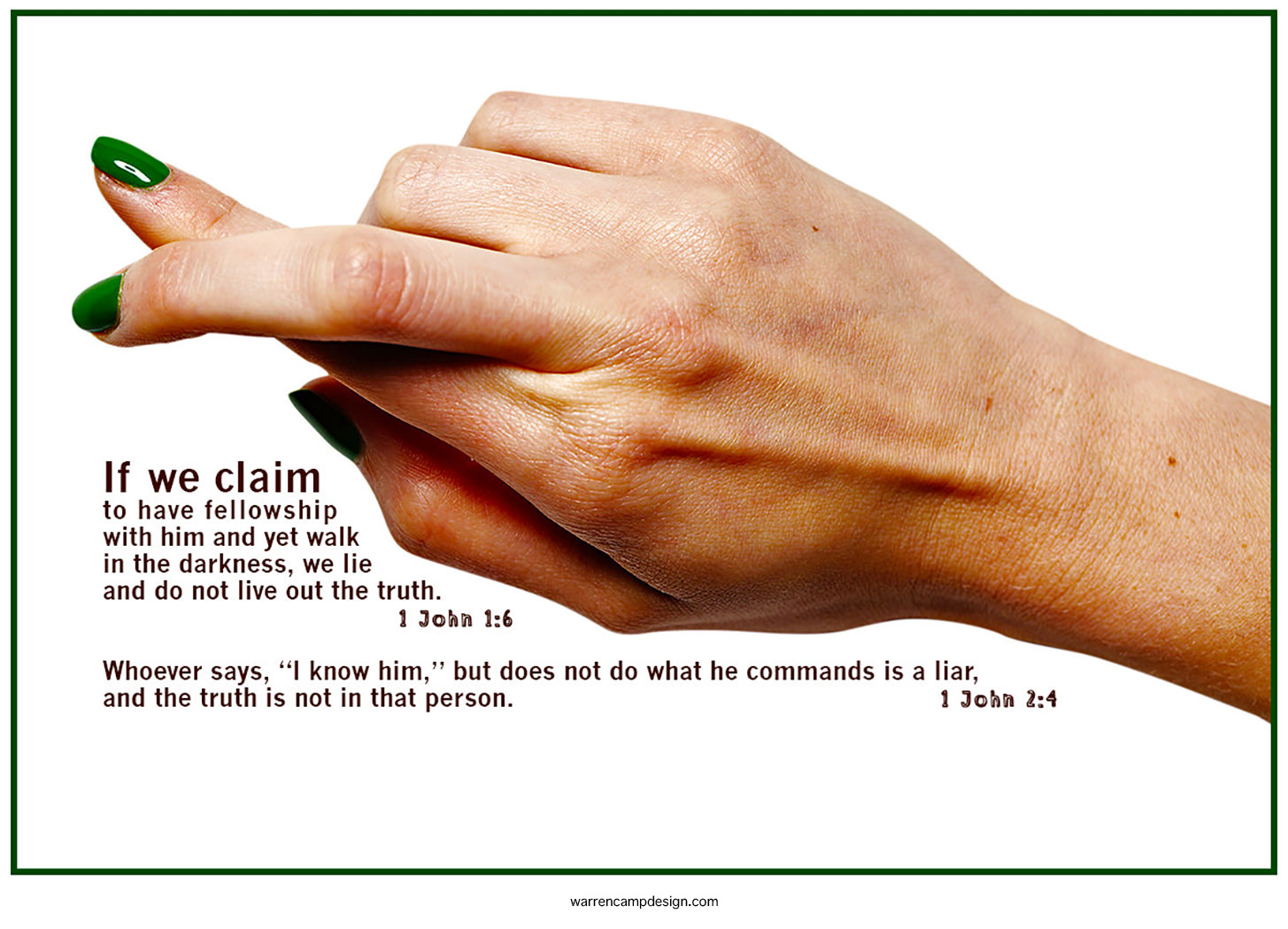
Click to enlarge this custom “truth” rendition
highlighting 1 John 1:6 and 1 John 2:4.
That doesn’t mean our obedience is perfect. John has already made clear that believers still sin and need Christ’s advocacy, forgiveness, and cleansing. But a believer can’t be content with a settled refusal to obey God. A claim to know him that’s consistently contradicted by disobedience is, John says, untrue.
In every age, people are tempted to turn freedom into “Do your own thing.” But God’s commands aren’t burdens meant to steal our joy. They reveal his good will for his children and guide us into the kind of life for which he created us. When we fail, we do not hide from God; we return to Jesus, confess our sin, and trust his forgiveness.
So how do we know that we know him? We come to know God through faith in Jesus, through his Word, through prayer, and through a growing willingness to obey what he says. Our knowing God isn’t simply having information about him, it’s a genuine relationship in which we learn to trust him, talk and listen to him, and follow him.

Click to enlarge 1 John 2:6.
In v. 6, John adds another phrase: “live in him.” Older Bible translations often use the word “abide,” while the NIV commonly uses “remain.” The thought is that believers make their home in Christ. We don’t merely visit him in times of need; it’ through faith that we remain in fellowship with him and draw our life from him.
To “live in him” means that our daily walk is increasingly shaped by Jesus. John says, “Whoever claims to live in him must live as Jesus did.” He’s not saying that we must duplicate every miracle Jesus performed or attain sinless perfection by our own effort. He’s calling us to follow Jesus’ pattern of humble obedience, love, holiness, truthfulness, compassion, and dependence on the Father.
Jesus’ words in John 15 help us understand this call. He says, “Remain in me” (John 15:4). A branch doesn’t produce fruit by straining to make grapes; it bears fruit because it remains connected to the vine. In the same way, we don’t become like Jesus through self-powered striving. As we remain in him, trust his grace, and obey his Word, his life produces spiritual fruit in us.
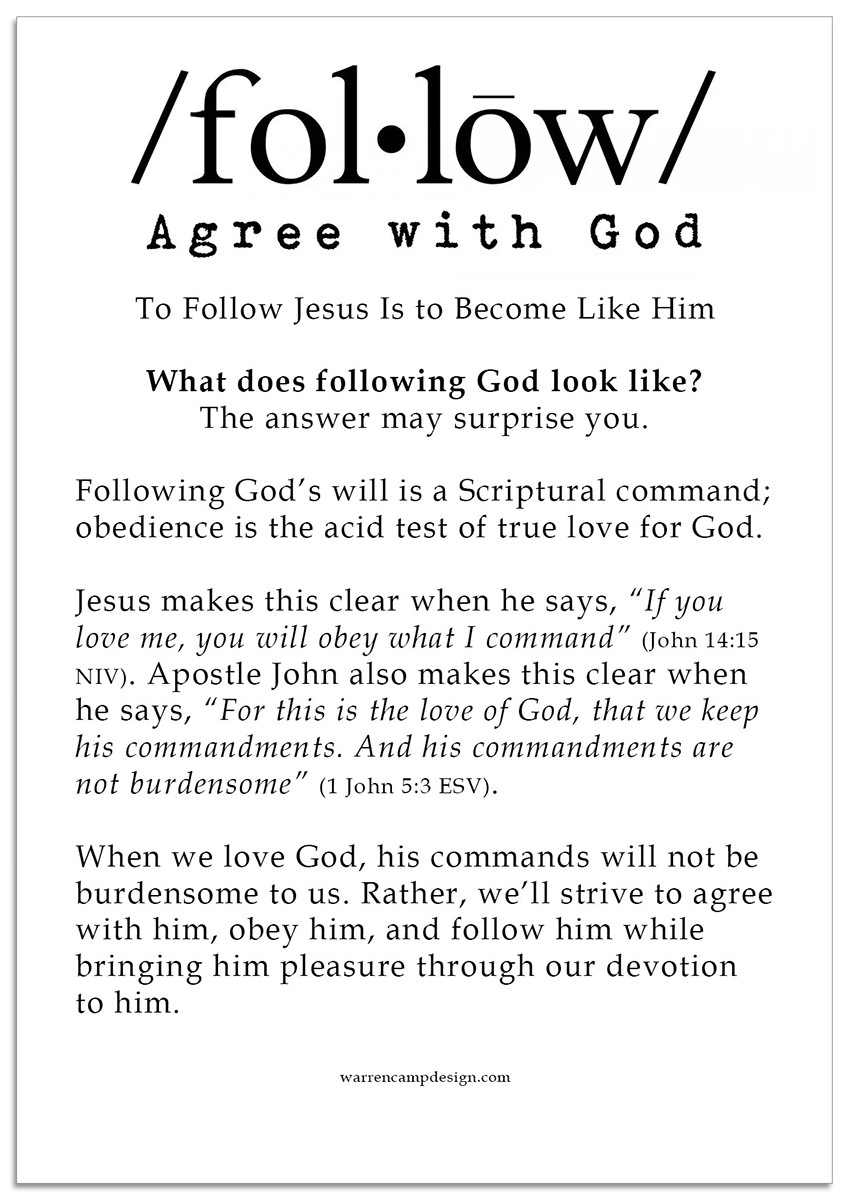
Click to see Warren’s take on “How to follow.”
Knowing and trusting Christ is genuinely freeing. We aren’t trying to earn God’s love; we obey because we’ve already received it. As we remain in the Savior, he continues to shape us into people whose lives increasingly reflect his character. Those of his disciples who successfully continue to follow him are to stop striving and struggling on our own. Instead, we’re to trust him to enable us to subdue our flesh or sinful nature.
Dr. Martyn Lloyd-Jones captures John’s point well:
“If you have the life, it is bound to show itself, and if it does not, then you have not the life…. You cannot be receiving the life of Christ without becoming like Him. You cannot walk with God without keeping His commandments. You cannot know God without immediately, automatically loving Him. Love always manifests itself by doing what the object of its love desires.”
(Walking With God [Crossway Books], p. 53)
† Summary and Key Points of 1 John 2:1–6
This six-verse passage moves from confession and forgiveness to assurance and obedience. John wants believers to know that when they sin, Jesus Christ is their Advocate with the Father and the atoning sacrifice for their sins. At the same time, John makes clear that knowing Christ is shown in a life that keeps his commands and increasingly lives as Jesus lived.
• Christ is our advocate. John writes so that believers won’t sin, but when they do sin, they have Jesus Christ, the Righteous One, as their Advocate with the Father (1 John 2:1).
• Jesus is the atoning sacrifice. Christ’s sacrifice deals decisively with sin — not only for John’s immediate readers, but also for the sins of the whole world (v. 2).
• Obedience confirms true knowledge of God. A real relationship with God is shown by keeping his commands, not merely by claiming to know him (v. 3).
• Profession without obedience is false. Anyone who says, “I know him,” but refuses to do what he commands isn’t speaking truthfully (v. 4).
• Love and obedience belong together. In the one who obeys God’s word, love for God is “truly made complete,” showing that genuine fellowship is active and concrete (v. 5).
• Christ’s life is our pattern. Those who claim to live in Christ are called to live as Jesus did, making his way of life the model for their own (v. 6).
- Q. 1 What does it mean that Jesus is “the atoning sacrifice” for our sins (v. 2)? How would you explain propitiation in your own words?
- Q. 2 How do you know that you know Christ (vv. 3–4)?
- Q. 3 Where is God inviting you to grow in obeying his commands and his word (vv. 3–5)?
- Q. 4 What might it look like for you to live more like Jesus this week (v. 6)?
1 John 2:1–6 (NIV)
Read the passage in another Bible version or listen to 1 John, chapter 2, read by Max McLean.
Summary Video
Watch this BibleProject overview of 1, 2, and 3 John.
Review and Prepare
Quiz time! Take Warren’s “John’s Three Epistles Quiz” now — or bookmark it and take it later.
You may also see Warren’s other Bible-study quizzes.