Join us this October on your remote study of John’s three epistles. (Follow the menu above.)
Apostle John’s Three Letters . . . 1 John 1:5–10
Light and Darkness, Sin and Forgiveness
Jesus, the Word of life,
is the true light.
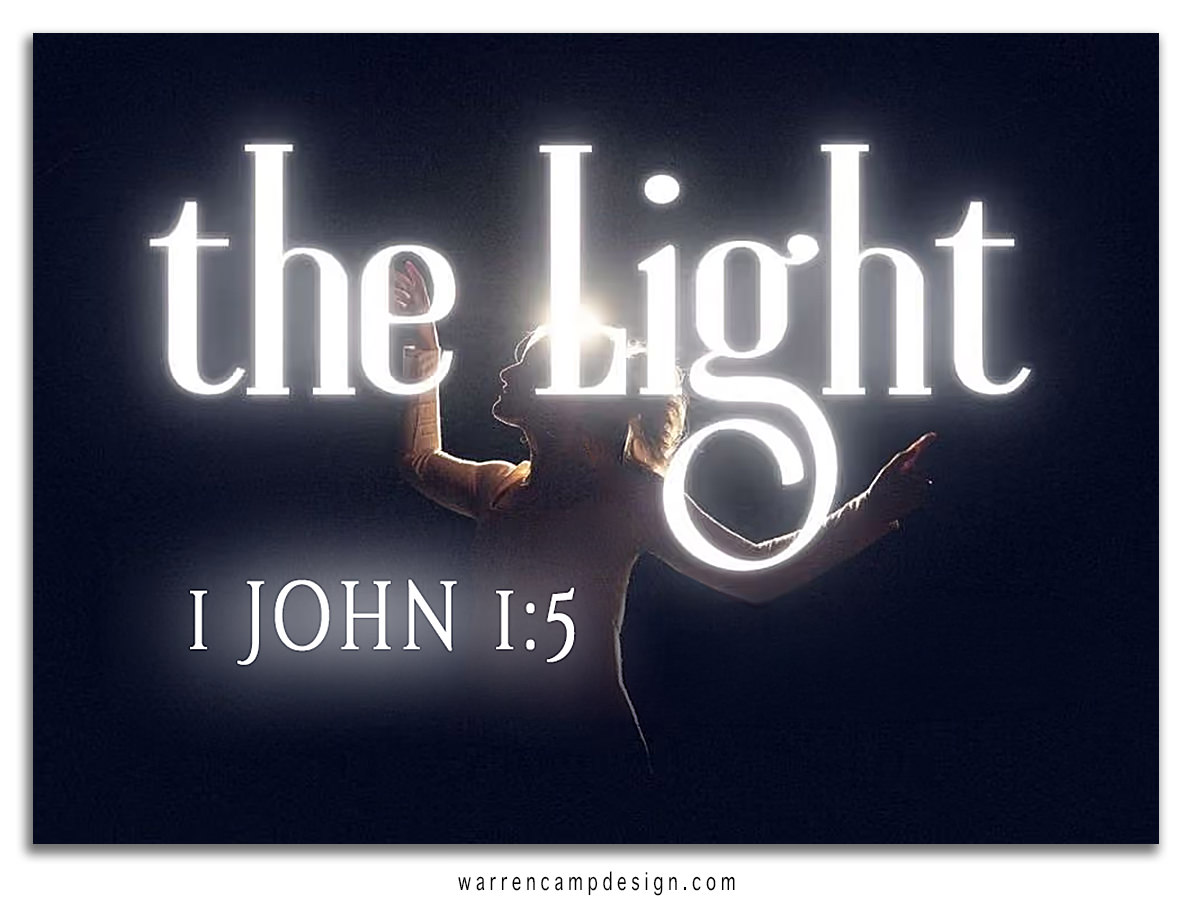
Click to enlarge and download 1 John 1:5.
Have you ever noticed how differently you walk when the lights are on? John now takes us from the Word of life to the God who is light. His message is both comforting and searching: God invites us to live openly in his light, honestly confess our sins, and receive the forgiveness and cleansing he graciously provides.
The prologue of 1 John (1:1–4) focuses on the incarnation of the Word of life — Jesus. As we saw last week’s summary, John’s opening verses also speak of our fellowship with the Father and his Son. Only six verses remain in chapter 1, yet they begin a longer section that continues through chapter 2 and into the first half of chapter 3. In it, John repeatedly turns our attention to light — God’s light (phos). He contrasts walking in the light with walking in darkness, and he contrasts confessing our sins with denying them. Throughout the letter, John helps believers understand what genuine faith looks like while giving them assurance of salvation.
God is explicitly called light in 1 John 1:5. Jesus is associated with “the true light” in 1 John 2:8, and believers are called to walk in the light, remain in the light, and love one another in the light (1:6–7; 2:9–10).
John’s letters don’t repeat Jesus’ direct statement in the gospel, “I am the light of the world” (John 8:12; 9:5). Still, John’s reference to “the true light” in this letter fits naturally with his gospel’s presentation of Jesus as the Light of the world.
Two key words in 1 John are “know” and “fellowship,” and we’ll return to both throughout our study. In the NIV, “know” appears more than forty times, while “fellowship” appears five times. John wants his readers to examine their faith — not to make them fearful, but to help them recognize the evidence of a genuine relationship with Jesus. Love for fellow believers is one important sign of God’s work in us. By contrast, a settled pattern of selfishness, hostility, or refusal to love should lead us to examine our hearts honestly.
John isn’t asking for sinless perfection. In fact, this passage reminds us that walking in the light includes admitting our sins and receiving the Lord’s forgiveness and cleansing. As God exposes sin in our lives, we can confess it to him, seek forgiveness where we’ve wronged others, and depend on his grace as we grow in knowing him.
Light and Darkness (1 John 1:5–7)
John begins today’s passage by bringing together the nature of God and the reality of sin. In v. 5, he declares that “God is light.” In v. 6, he warns against claiming fellowship with God while continuing to walk in darkness. Then, in v. 7, he describes the blessings of walking in the light: fellowship with one another and cleansing through the blood of Jesus.
5This is the message we have heard from him and declare to you: God is light; in him there is no darkness at all. 6 If we claim to have fellowship with him and yet walk in the darkness, we lie and do not live out the truth. 7But if we walk in the light, as he is in the light, we have fellowship with one another, and the blood of Jesus, his Son, purifies us from all sin (1 John 1:5–7).
Fellowship is an essential theme in 1 John and in Christian living. In vv. 3–4, John speaks of fellowship with the apostles, the Father, and the Son — a fellowship that brings complete joy. Now, in vv. 5–7, he shows that genuine fellowship with God is expressed in walking in the light. Because God is light and there’s no darkness in him, those who know him can’t be content to continue in darkness.
John’s warning speaks to believers in every generation. Some people in the churches were claiming to know God while refusing the moral demands of a life with him. John exposes the contradiction: A person can’t truthfully claim fellowship with the God who is light while choosing a settled pattern of darkness. Walking in the light doesn’t mean that we never sin; as the verses that follow will make clear, it means that we live openly before God, confess our sin, and depend on his cleansing grace.
These three verses invite us to ask a deeply personal question: Father, what do you want from me? John answers by helping us understand what it means to live as followers of Jesus. When we ask, What does God ask of me? or How should I live as a disciple of Jesus? John directs us to walk in God’s light — to pursue a life that reflects his holy character.
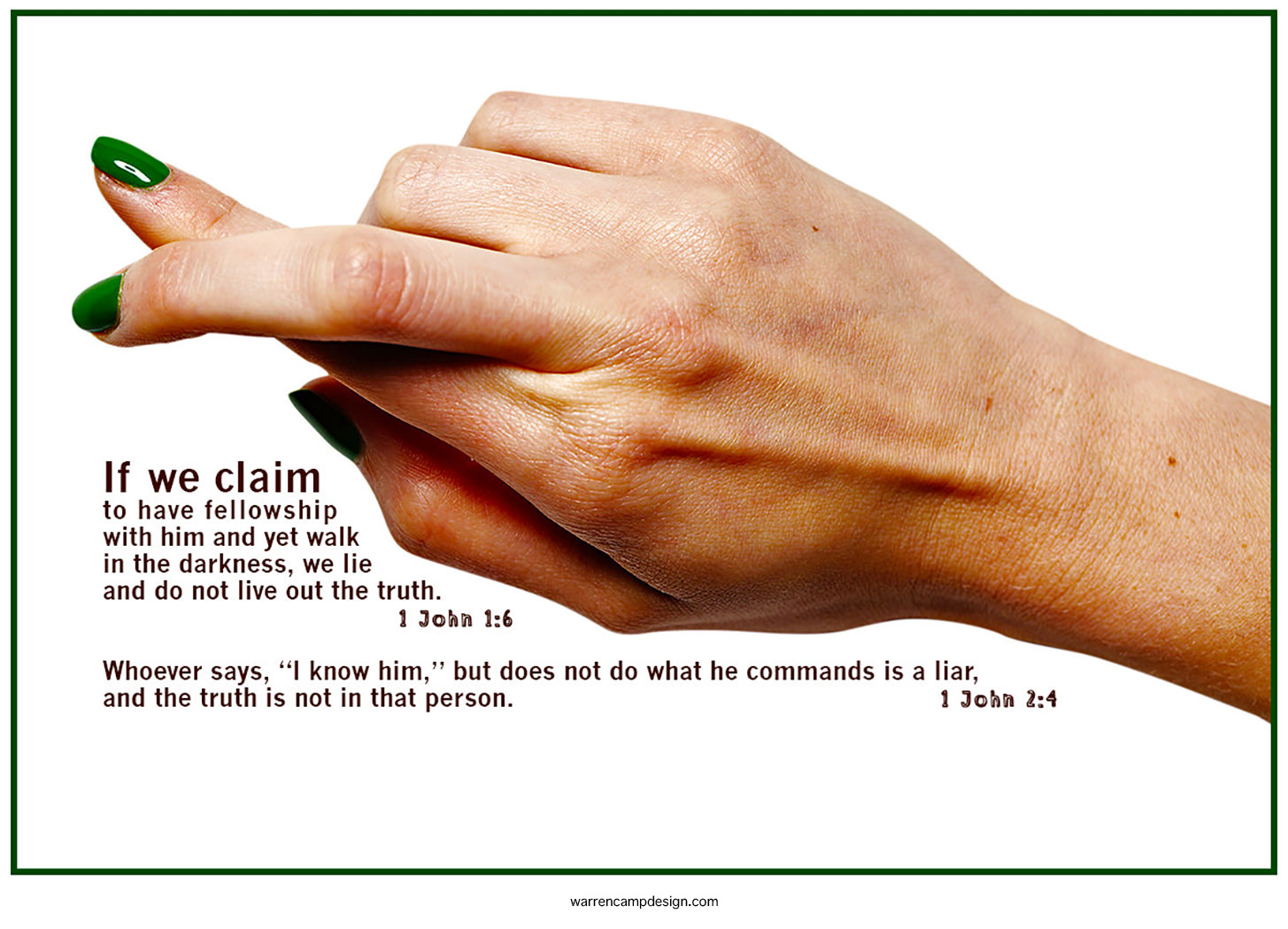
Click to enlarge Warren’s custom creation 1 John 1:6.
God’s declaration, “God is light,” gives us more than an image of a safe path through darkness. It reveals his holy, pure, and truthful nature. Because God has made himself known, we can know him and learn to walk in the way he calls us to follow. The message John declares isn’t his own invention; it comes “from him” — from Jesus, the Word of life whom John and the other apostles had heard, seen, and touched (1 John 1:1). Through Jesus, John proclaims the truth that God is light and that there’s no darkness in him at all.
John first mentions fellowship in v. 3, both among believers and with the Father. He returns to that theme in v. 6. If God is light and has no darkness in him, we can’t genuinely walk with him while choosing to walk in darkness. Such a claim isn’t merely inconsistent; John says it’s a lie — to ourselves, to fellow believers, and ultimately to God.
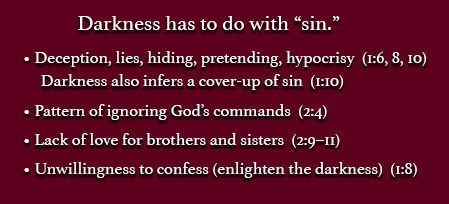
My next six paragraphs make an important pastoral turn: John’s call to walk in the light isn’t a demand for anxious perfectionism; it’s a call to honest, Spirit-dependent living before the God who’s made cleansing available through his Son.
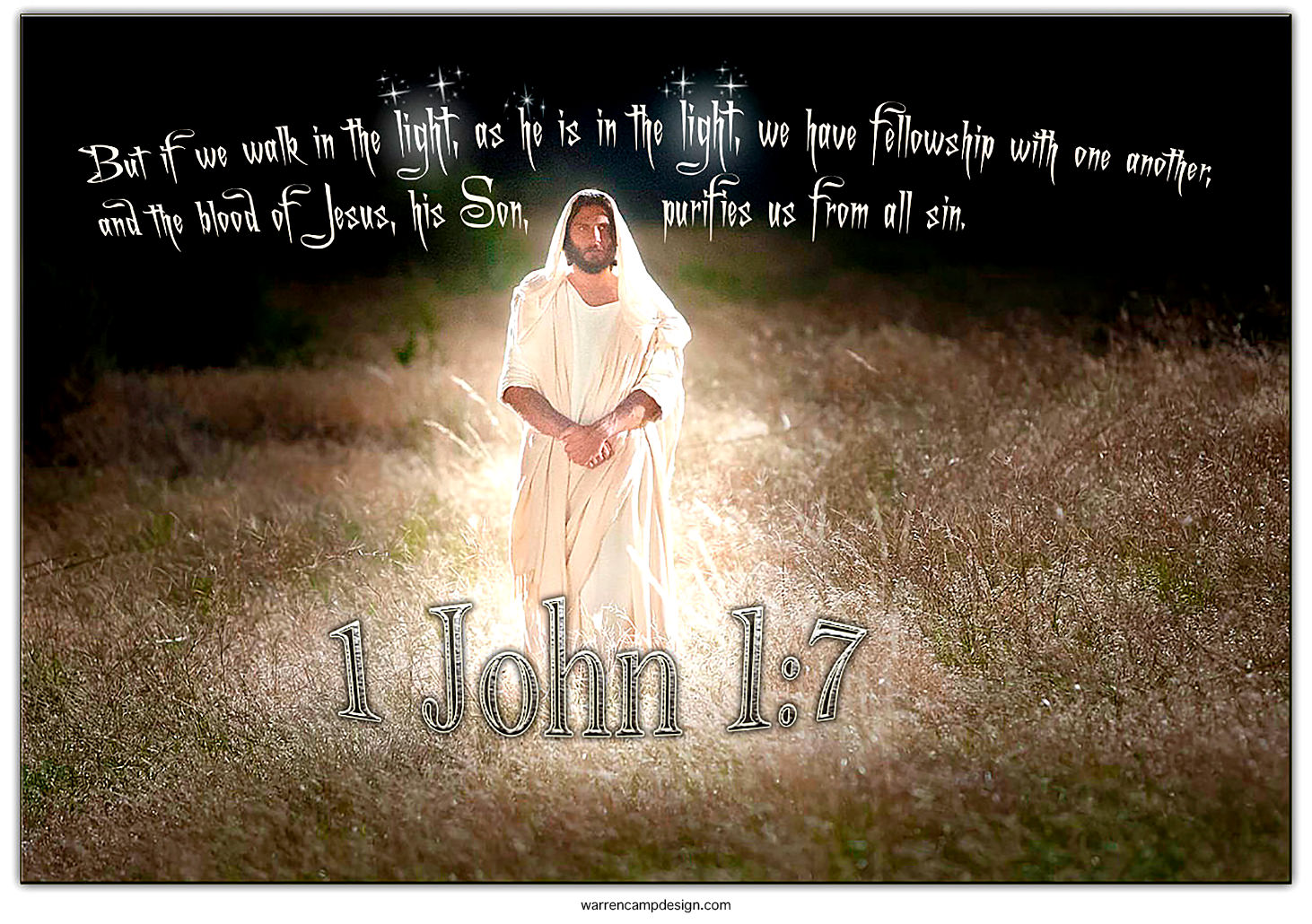
Click to enlarge this
“walk in the light” image:
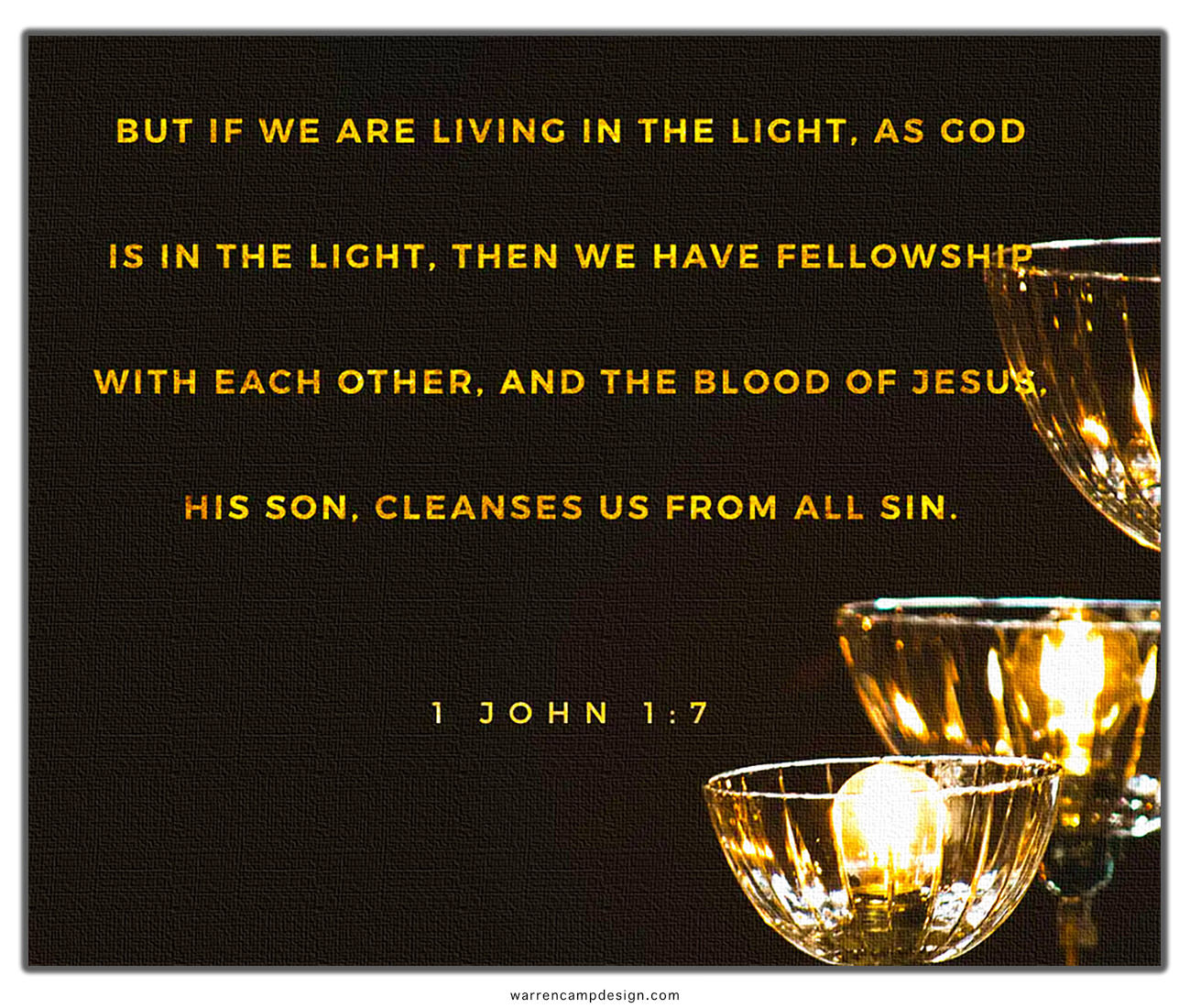
1 John 1:7
Click to enlarge this
“walk in the light” image:
1 John 1:7
John strengthens his “God is light” declaration by adding, “in him there is no darkness at all” (v. 5). God is completely holy, pure, and true. Darkness has no place in him. Because of that, darkness is incompatible with fellowship with God. We can’t claim to know the God who is light while choosing to live in darkness.
John tells us that those who claim fellowship with the Father must “walk in the light” not “walk in the darkness” (vv. 6–7). To walk in the light is to present ourselves to God — our thoughts, words, choices, actions, and relationships — allowing his truth to guide us, thereby living to reflect his holy character.
As we’ll see in vv. 8 and 10, John doesn’t expect believers to claim perfection. Walking in the light doesn’t mean pretending we never sin. Rather, it means living openly and honestly before God, allowing his Spirit to expose what’s wrong, as well as depending on his grace to lead us in the way of righteousness.
Jesus was perfect for you Perfectionism is often fueled by a steady stream of shoulds and oughts — the nagging feeling that we’re never doing enough or being enough. We may think, I should pray better. I should read the Bible more. I should be kinder. We want to please God, but we may also fear that he’s disappointed with us because we don’t measure up.
But the way to God isn’t through our own perfection. When people asked Jesus, “What must we do to do the works God requires?” he answered, “The work of God is this: to believe in the one he has sent” (John 6:28–29, NIV). God calls us to trust his Son and believe his Word. We don’t buy or earn his love; it’s his gracious gift. Because of Jesus, those who trust in him are accepted by God and can walk with him in freedom rather than fear.
John has more to teach us about living in the light of the God who’s light. In vv. 8–10, he turns to the ever-present reality of sin and shows us both the wrong way and the right way to respond to it.
Sin and Forgiveness (1 John 1:8–9)
8If we claim to be without sin, we deceive ourselves and the truth is not in us. 9If we confess our sins, he is faithful and just and will forgive us our sins and purify us from all unrighteousness (1 John 1:8–9).
Now that we’ve read both verses, consider Augustine’s helpful observation: “If thou shalt confess thyself a sinner, the truth is in thee; for the truth is itself light. Not yet has thy life become perfectly light, as sins are still in thee, but yet thou hast already begun to be illuminated, because there is in thee confession of sins.” Confession of sin isn’t a denial that we’re walking in the light. It’s one of the clearest signs that we are!
We can’t deceive God, who knows us completely. But when we deny our sin, we deceive ourselves. John says plainly, “If we claim to be without sin, we deceive ourselves and the truth is not in us.” Rather than hiding, excusing, or minimizing our sin, God calls us to bring it honestly before him. Confession means agreeing with God about our sin and turning to him for forgiveness and cleansing.
Notice that John uses the singular word “sin” in v. 8 and the plural word “sins” in v. 9. While in v. 8 he addresses the reality of sin still present in us., in v. 9, he speaks of the particular sins we commit and confess. We continue to struggle with sin, but we’re not left without hope. As Paul describes in Romans 7:14–25, believers know the painful conflict between wanting to obey God and recognizing sin’s continuing influence in their lives.
God’s desire is that we don’t sin, yet he knows that we’ll still fail him. Our sin doesn’t make God stop loving his children; neither does it cancel the salvation he’s given through Christ. Thankfully for believers, we’re saved eternally. But sin does disrupt our enjoyment of fellowship with him, dull our assurance, and rob us of the joy that comes from living openly before him. That’s why confession matters so deeply.
When the Holy Spirit makes us aware of sin, we should respond honestly and without delay. John gives us this wonderful promise: “If we confess our sins, he is faithful and just and will forgive us our sins and purify us from all unrighteousness.” God is faithful to his promises as well as just because Jesus has borne the penalty for sin. We don’t come to him bargaining for mercy; we come trusting the mercy he’s already provided through his Son.
Warren’s custom creation.
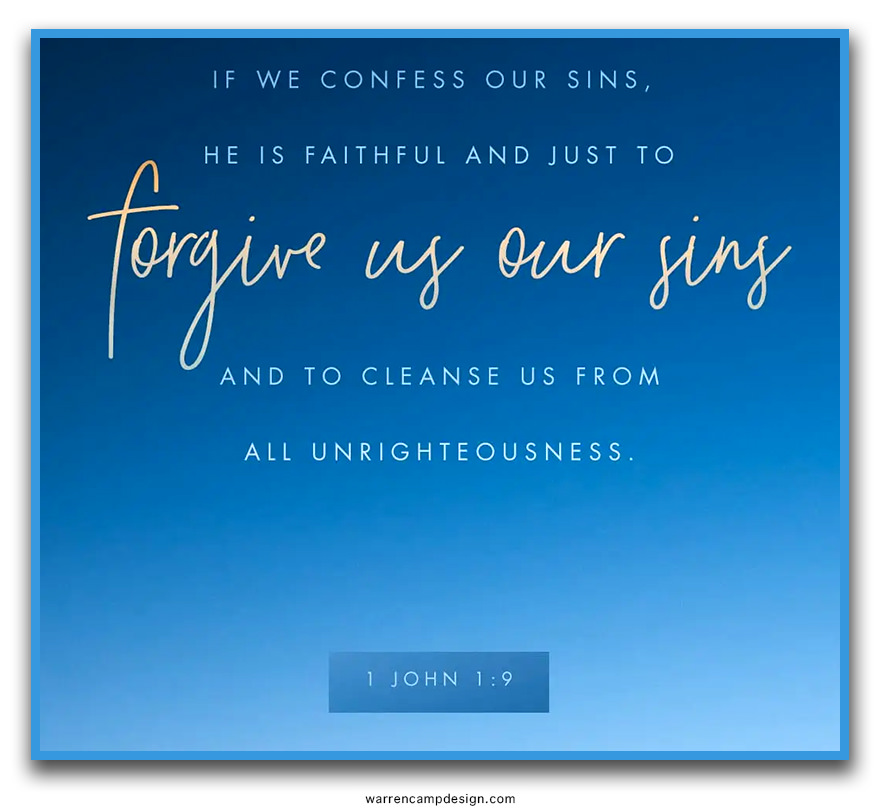
Click to enlarge this Scripture picture of 1 John 1:9
Confession isn’t a way of earning God’s forgiveness. It’s actually the humble response of a believer who trusts and fully appreciates God’s grace. Every time we bring our sins into his light, he forgives us, cleanses us, and restores the joy and openness of our fellowship with him.
Our fellowship with other believers also matters. We need brothers and sisters who’ll encourage us, pray with us, remind us of the gospel, and lovingly help us walk in the light. As Ecclesiastes says, “Two are better than one” (Ecc. 4:9–10). Gathering with believers to open Scripture, speak of Christ, pray, and worship can refresh our hearts and strengthen our joy in the Lord.
John’s words also echo the mercy God revealed through the prophets. Micah rejoiced that God pardons sin and delights to show mercy (Micah 7:18–19). God doesn’t merely expose our sin; in Christ, he provides forgiveness, cleansing, and continuing transformation. As we honestly confess our sin and look to Jesus, God steadily renews us in the likeness of his Son.
That brings us naturally to chapter 1’s final and searching verse.
Those Who Claim to Be Without Sin (1 John 1:10)
10If we claim we have not sinned, we make him out to be a liar and his word is not in us (1 John 1:10).
Click to read Warren’s take
on “1 John 1:5–10.”
This verse offers the fifth and final conditional “If” statement in today’s passage. In vv. 5–10, John contrasts truthful living in God’s light with false claims that deny the reality of sin. Verse 8 addresses the present claim to be without sin. Here in v. 10, the words “have not sinned” reach back over a person’s past: the claim is that one has never sinned.
That claim has two serious results. First, when we say that we haven’t sinned, we make God out to be a liar. God’s Holy Word forbids us to lie, as we’re told in these verses. God’s Word plainly teaches that all people are sinners who need his mercy. To deny our sin is therefore to contradict what God has said about us.
Second, John says that God’s word isn’t in us. A person who refuses to admit sin is resisting the very truth the gospel reveals: We need a Savior. Only Jesus lived without sin. Hebrews tells us that he “has been tempted in every way, just as we are — yet he did not sin” (Heb. 4:15 and 2 Corinthians 5:21).
John’s words are searching, but they’re also merciful. He doesn’t expose our sin so that we’ll despair; he exposes it so that we’ll come honestly to the God who forgives and cleanses. The right response isn’t to deny our sin, but to confess it and trust the grace God has provided through Jesus.
† Summary and Key Points of 1 John 1:5–10
This six-verse passage moves from John’s eyewitness introduction to the practical message that flows from it: God is light, so fellowship with him can’t coexist with a settled life of darkness. John calls his readers to live honestly before God, confess their sins, and rest in the forgiveness and cleansing provided through Jesus.
• God is light. John gives us the foundational message: God is completely holy, pure, and true; “in him there is no darkness at all” (1 John 1:5).
• Fellowship with God means walking in the light. Claiming fellowship with God while choosing a settled pattern of darkness is a contradiction, because genuine fellowship with him bears fruit in a changed life (vv. 6–7).
• Walking in the light brings fellowship and cleansing. As believers live openly before God, they enjoy fellowship with one another, and the blood of Jesus, his Son, purifies them from all sin (v. 7).
• Denying sin is self-deception. John warns that claiming to be without sin isn’t truth, but self-deception (v. 8).
• Confession brings forgiveness and cleansing. When believers confess their sins, God is faithful and just to forgive and cleanse them from all unrighteousness (v. 9).
• Claiming never to have sinned contradicts God’s word. To insist that we’ve not sinned is to make God a liar, because it denies the testimony of his revealed truth (v. 10).
The important change is “a settled life of darkness” rather than simply “a life of ongoing darkness.” It preserves John’s moral seriousness without implying that a believer’s individual failures mean he’s outside fellowship with God.
- Q. 1 How is God “light”? Why can there be no darkness in him?
- Q. 2 What does it mean to “walk in the light” (v. 7)?
- Q. 3 According to vv. 5–7, what does genuine fellowship with God look like?
- Q. 4 What happens when we claim that we have no sin or haven’t sinned (vv. 8, 10)? Why is honest confession so important?
1 John 1:5–10 (NIV)
Read the passage in another Bible version or listen to 1 John, chapter 1, read by Max McLean.
Summary Video
Watch this BibleProject overview of 1, 2, and 3 John.
Review and Prepare
Quiz time! Take Warren’s “John’s Three Epistles Quiz” now — or bookmark it and take it later.
You may also see Warren’s other Bible-study quizzes.
