Jesus’ “Sermon on the Mount”. . . Matthew 7:24–29
“The Wise and Foolish Builders”
Jesus closes his sermon with two builders whose foundations determine how their houses withstand the storm. His illustration brings the question home to each of us: Will we simply hear his words, or put them into practice?
In this section of his Sermon on the Mount, Jesus describes two builders, two foundations, and two very different outcomes. One man builds his house on rock; the other builds on sand. Both houses face pounding rain, rising streams, and powerful winds. The difference isn’t that one builder escapes the storm. It’s that one house has a foundation that enables it to stand. Jesus uses this picture to show the difference between hearing his teaching and putting it into practice.
What are we building our lives on? It’s a question we might not think much about when everything’s going well. But when trouble comes, the foundation beneath our daily choices becomes much more important. As we reach the conclusion of Jesus’ Sermon on the Mount, he invites us to consider whether we’re simply listening to his teaching or allowing it to shape the way we live.
In this final section of his sermon, Jesus describes two builders, two foundations, and two very different outcomes. One man builds his house on rock; the other builds on sand. Both houses face pounding rain, rising streams, and powerful winds. The difference isn’t that one builder escapes the storm. It’s that one house has a foundation that enables it to stand. Through this simple picture, Jesus brings his teaching close to home: What are we doing with the words we’ve heard?
Jesus identifies the wise builder as the person who hears his words and puts them into practice. The foolish builder also hears, but doesn’t act on what he’s heard. Knowing Jesus’ teaching, appreciating its wisdom, or agreeing that it’s true isn’t the same as living by it. Building on the rock means receiving his words as the trustworthy foundation for our lives and responding with obedience.
The storm gives this closing illustration its urgency. We can apply the picture to the troubles that test our faith, but Jesus’ warning reaches beyond getting through difficult circumstances. Read in light of his preceding warning about entering the kingdom (vv. 21–23), the collapse also points toward the seriousness of God’s judgment. This isn’t a promise that following Jesus will make life easy; it’s a call to build our lives on a foundation that will hold when everything we’ve relied on is put to the test.
No new set of rules; it’s about how we respond to Jesus.

Click to watch BibleProject’s video: “The Choice.”
As we read the closing verses, we’ll also notice the crowd’s response. The people are amazed because Jesus teaches with authority in a revolutionary style, unlike their teachers of the law. Yet his illustration leaves each of us with a question that amazement alone can’t answer: Will we put his words into practice?
For a helpful review of the choices Jesus presents near the end of his sermon, watch this seven-minute BibleProject video called “The Choice.” It highlights the core decision Jesus places before his followers: how we respond to his teachings, not just our general behavior.
Also watch this video clip by Lumo Project Films contrasting a wise man who builds his house on a rock — allowing it to withstand severe rain, floods, and winds — with a foolish man who builds on sand, causing his house to collapse.
The Wise Builder: Hearing Jesus’ Words and Living Them (7:24–25)
Jesus now brings his sermon to a personal point of decision. We’ve listened to his teaching about life under our heavenly Father’s rule. What will we do with what we’ve heard? His picture of a wise builder helps us see that the foundation of a faithful life isn’t merely knowing his words, but putting them into practice.
Therefore everyone who hears these words of mine and puts them into practice is like a wise man who built his house on the rock. The rain came down, the streams rose, and the winds blew and beat against the house; yet it did not fall, because it had its foundation on the rock” (vv. 24–25, NIV).
Jesus begins with “Therefore,” connecting this illustration to the teaching that’s come before it. His sermon isn’t simply a collection of inspiring thoughts for us to admire. It calls for a response. When he speaks of “these words of mine,” he directs our attention to his own teaching as something trustworthy enough to build our lives upon. The question is no longer only, “Do I understand what Jesus is saying?” It’s also, “Will I let his words shape the way I live?”
Notice that Jesus describes the wise person as someone who both hears and acts. Listening matters; we can’t faithfully follow teaching we haven’t received. But listening is the beginning, not the whole response. We may read the sermon repeatedly, remember its familiar sayings, and discuss its meaning with others. Those are worthwhile activities, but Jesus calls us to take the further step of obedience. His words are meant to move from the page into our relationships, decisions, desires, and daily habits.
What might that look like? When anger rises, we take his call to reconciliation seriously. When we’re tempted to impress others with our generosity or prayers, we remember that our Father sees what’s done in secret. When worry begins to govern our choices, we turn again toward trusting our Father and seeking his kingdom. Building on the rock takes shape in these ordinary moments, as we respond to Jesus’ teaching rather than treating it as something to admire from a distance. This reminds me of an old gospel chorus called “Why Worry When You Can Pray?” [Watch a powerful performance of this gospel hymn.]
This doesn’t mean that a wise disciple never struggles or fails. Putting Jesus’ words into practice isn’t a claim to flawless performance. His sermon has already taught us to ask our Father for forgiveness. When we recognize that we’ve disobeyed, the faithful response isn’t to defend our failure or abandon his teaching. It’s to turn back to him, seek his forgiveness, and take the next step of obedience. We’re learning to live under his rule rather than insisting on our own.
Then the storm arrives. Jesus describes rain falling, streams rising, and winds beating against the house. The wise builder’s home isn’t sheltered from the weather; it stands in the middle of it. Following Jesus doesn’t exempt us from grief, illness, disappointment, opposition, or loss. We shouldn’t mistake hardship for evidence that we’ve chosen the wrong foundation. In Jesus’ illustration, the storm reaches the house built on rock too.
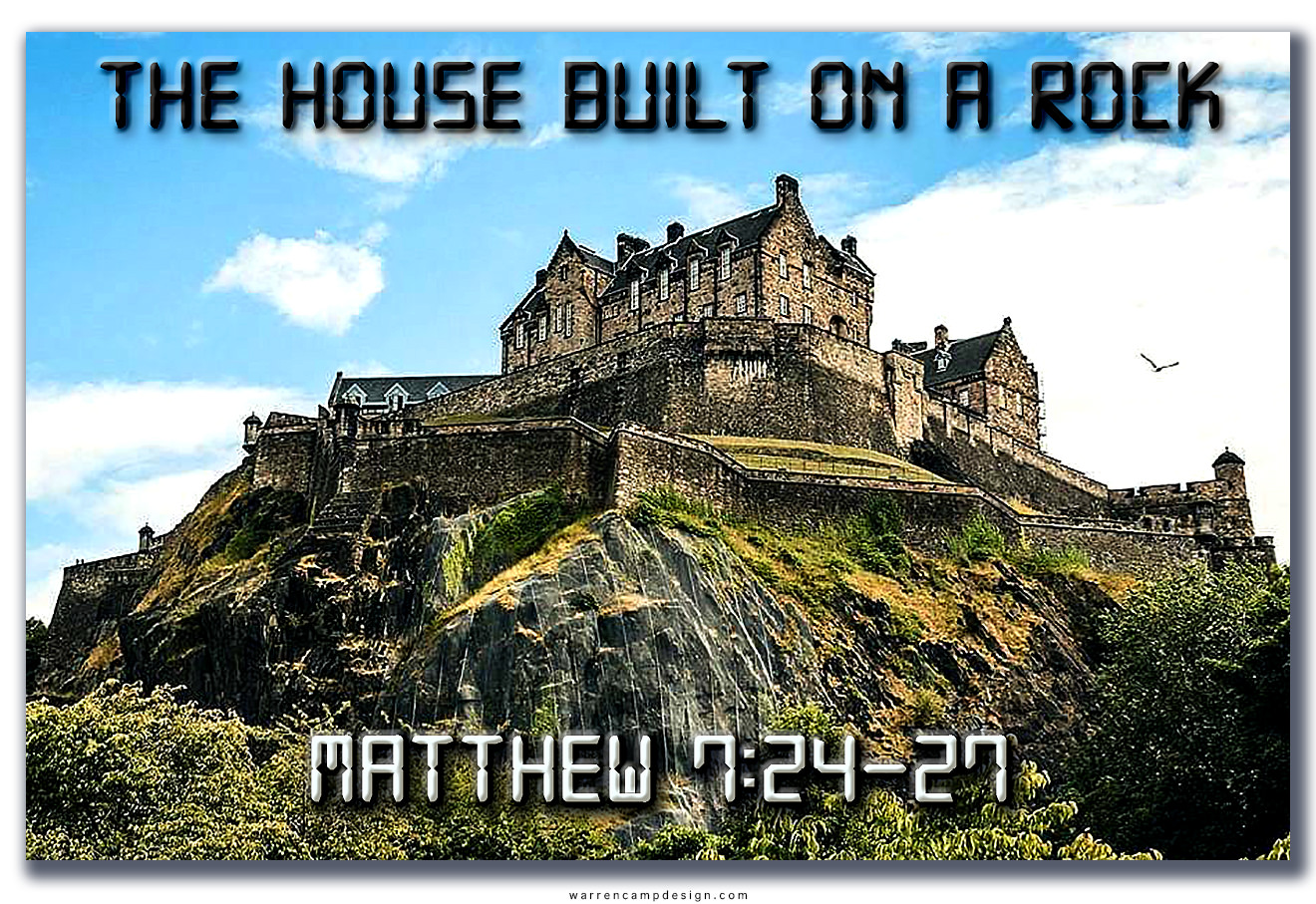
Click to enlarge.
The house stands because of its foundation, not because the storm is mild. That distinction offers encouragement without promising an easy life. We may feel shaken, and we may need the prayers and help of others, but our distress doesn’t make Jesus’ words less trustworthy.
In 7:24–27, the storm hits both houses equally — the rain falls, the floods come, and the winds blow and beat against them. His teaching continues to call us toward truthfulness, mercy, prayer, forgiveness, and trust — even when circumstances make those responses costly.
The house on the rock stands not because it escapes the storm or because the weather is mild, but specifically because its foundation is anchored on solid rock.
As we consider this wise builder, let’s ask ourselves where we need to act on something Jesus has already taught us. Is there a relationship in which we need to seek peace? A private habit we need to surrender? A worry we need to bring honestly to our Father? We don’t strengthen our foundation merely by agreeing that Jesus is right. We build on the rock as we trust him enough to do what he says.
The Foolish Builder: Hearing Without Obeying (7:26–27)
Jesus now describes someone who hears the same words but responds differently. The contrast isn’t between a knowledgeable listener and an uninformed stranger. It’s between two ways of responding to Jesus.
But everyone who hears these words of mine and does not put them into practice is like a foolish man who built his house on sand. The rain came down, the streams rose, and the winds blew and beat against that house, and it fell with a great crash” (vv. 26–27, NIV).
The foolish builder has heard. That detail should keep us from treating familiarity with Scripture as proof that our foundation is sound. We may recognize a passage, explain its meaning, and agree that others should follow it while avoiding its claim on ourselves. Jesus warns against the gap between receiving instruction and responding to it. The problem isn’t simply a shortage of information; it’s a refusal to let his teaching govern the life.
That refusal doesn’t always take the form of open hostility. Sometimes it sounds like postponement: “I’ll deal with that later.” We may intend to repair a relationship after the other person apologizes, become honest when the consequences seem smaller, or practice generosity when we feel more secure. Yet repeatedly delaying obedience allows us to become comfortable with hearing without doing. Good intentions can become a way of avoiding the response Jesus is asking for now.
The storm exposes the weakness of the foundation. Jesus doesn’t tell us that the foolish builder faced worse weather than the wise builder. Both houses are battered, but only one stands. Neither should we invent details about the houses’ size, appearance, or construction costs. The point Jesus supplies is sufficient: The foundation makes the decisive difference. A life may seem secure by ordinary measures while lacking the response to Jesus that his illustration calls wise.
The “great crash” makes this a warning, not merely a lesson about improving our habits. Read alongside the preceding words about entering the kingdom and answering to Jesus, it points toward the seriousness of final accountability. We shouldn’t reduce the collapse to an embarrassing setback or assume that success in this life proves we’re spiritually safe. Jesus asks us to consider an outcome that reaches beyond present comfort, approval, or achievement.
At the same time, we shouldn’t use the illustration to declare that someone’s suffering proves disobedience. The wise builder also experiences the storm. Nor should a repentant believer conclude that one failure means the whole house has fallen. The warning calls us away from settled resistance to Jesus, not into endless anxiety about whether we’ve obeyed perfectly. While we’re hearing his words, we have an opportunity to respond. Let’s receive that opportunity with humility rather than defensiveness.
The Crowd’s Response: Amazed at Jesus’ Authority (7:28–29)
After Jesus finishes speaking, Matthew turns our attention from the builders to the listeners. The crowd recognizes something distinctive about the way Jesus teaches.
When Jesus had finished saying these things, the crowds were amazed at his teaching, because he taught as one who had authority, and not as their teachers of the law (vv. 28–29, NIV).
Matthew identifies authority as the reason for their amazement. Jesus hasn’t presented his teaching as one interesting possibility among many. He’s spoken of his own words as the foundation on which a life can stand. His illustration therefore makes a remarkable claim: Our response to what he says matters decisively. The crowd’s reaction helps us recognize the weight of that claim rather than treating the story as a familiar piece of practical advice.
The comparison with their teachers of the law emphasizes the distinctiveness of Jesus’ teaching. We don’t need to assume that every teacher of the law was insincere or that none offered helpful instruction. Matthew’s point is the authority the crowd encountered in Jesus. He doesn’t merely direct attention toward a building principle that exists apart from him. He calls people to hear “these words of mine” and live accordingly.
Yet amazement and obedience aren’t the same response. Matthew tells us that the people were impressed; these verses don’t tell us that everyone present became a faithful disciple. We should be careful not to supply an outcome he hasn’t given. The unanswered question is useful for us too: After we recognize the wisdom and authority of Jesus, what will we do with what we’ve heard?
We can admire a sermon and leave our habits untouched. We can also receive Jesus’ authority as a good gift, trusting that the one who calls us to obey is worthy of our confidence. His words may challenge our preferences, expose our excuses, and require difficult changes. But the wise builder shows us the fitting response: not amazement alone, but a life increasingly shaped by trust and obedience.
Practical Application of This Sermon Passage (7:24–29)
† Identify one teaching you need to practice. Rather than forming a long list of everything you should change, begin with a clear response to something Jesus has already shown you. Is there a conversation you need to have, a dishonest habit you need to confess, or an act of generosity you’ve postponed? Make the next step specific enough that you can act on it.
† Examine what you depend on for security. Money, health, relationships, reputation, and careful planning all have a place in life, but none can bear the full weight of our trust. Ask yourself what happens when one of these is threatened. Bring your fears honestly to God, and consider how Jesus’ words can guide your response instead of allowing fear to make the decision.
† Respond to failure with repentance rather than excuses. When you discover a gap between what you believe and how you live, don’t conceal it behind religious activity or become convinced that change is impossible. Confess what’s wrong, receive God’s mercy, and seek appropriate help. Where your actions have harmed someone, consider what truthful acknowledgment and practical repair should follow.
† Let Bible study lead to an accountable response. At the end of a reading or discussion, ask, What does this call me to do? Share an appropriate next step with a trusted believer who can pray with you and encourage you. The purpose isn’t to display your progress, compare yourself with others, or earn approval. It’s to help the connection between hearing and doing become part of your daily walk.
Conclusion

Click to watch BibleProject’s superb video.
We must choose wisely! Matthew 7:24–29 brings a clear question before us: What are we doing with Jesus’ words?
Thankfully, our Lord Jesus helps us answer that question appropriately. He provides the three unique images to illustrate the choice his followers face in responding to his call to follow him. Watch BibleProject’s seven-minute video exploring Jesus’ call for us to choose the path that leads to life. Both builders hear, both build, and both encounter a storm. Their different outcomes reveal the importance of their foundations.
Jesus calls us beyond familiarity, agreement, and admiration to the practical trust that takes his teaching seriously. The issue isn’t whether we can describe a firm foundation, but whether we’re building on it.
This call should lead us neither to self-congratulation nor to despair. We don’t obey without needing mercy, and we don’t grow without needing help. We can come honestly to Jesus with our failures, fears, and resistance, asking him to teach us how to respond faithfully. As we receive his words, let’s take the next step they require — not to make ourselves impressive, but because we trust the One who speaks.
- Q. 1 What’s the difference between knowing what Jesus teaches and building your life on his words? Where do you need to take a specific step from hearing to doing?
- Q. 2 When difficulties threaten your sense of security, what do you tend to depend on first? How might trusting Jesus change your response without requiring you to pretend that the difficulty doesn’t hurt?
- Q. 3 The crowds were amazed at Jesus’ authority. In what area of your life do you find it easiest to admire his teaching but hardest to submit to it?
Are you ready to take Warren’s 25-question Sermon on the Mount quiz? Answers with Bible references are included with your grade.